

When the skies darken and the first thunder rolls across the horizon, real-time storm tracking transforms from science to spectacle. On Weather Street, this sub-category dives into the thrilling world of live meteorology—where technology meets nature’s most dramatic performances. From radar mosaics painting the pulse of a supercell to satellites capturing lightning flashes in orbit, real-time tracking gives us front-row seats to the atmosphere’s raw power. It’s about more than just watching the weather—it’s about understanding its motion, predicting its path, and preparing for what’s next. Explore how Doppler radar, AI-driven forecasting, and high-resolution data streams are revolutionizing how we monitor hurricanes, tornadoes, and thunderstorms as they unfold. Whether you’re a storm chaser, a safety-conscious homeowner, or simply a weather enthusiast, this is where insight meets adrenaline. Follow every swirl, surge, and strike—because in the world of real-time storm tracking, every second counts, and every pixel tells a story written by the wind.
A: Most U.S. radars refresh every 1–2 minutes, with specialized modes updating even faster.
A: A watch means conditions are favorable; a warning means danger is occurring or imminent.
A: Yes—radar apps and National Weather Service feeds provide near-real-time imagery.
A: By measuring velocity shifts in rain particles moving toward or away from the radar beam.
A: Rapid changes in wind shear, humidity, or boundary collisions can trigger explosive growth.
A: Many are; others are trained spotters who relay verified observations to NWS offices.
A: Infrared sensors measure emitted heat rather than visible light.
A: A basement or interior room on the lowest floor, away from windows and corners.
A: Not the funnel itself, but radar detects rotation and debris signatures.
A: Use official sources like NOAA, NWS apps, or local broadcast meteorologists for accuracy.
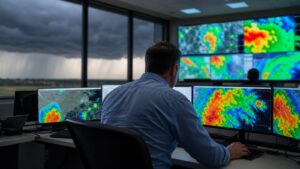
How Real-Time Storm Tracking Works: From Radar Pulses to Live Forecast Maps
Real-time storm tracking turns radar pulses, velocity data, satellites, sensors, and forecast models into live maps that help meteorologists follow dangerous weather.
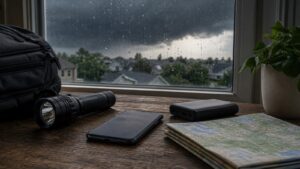
Best Real-Time Storm Tracking Apps for Accurate Weather Alerts
The best storm tracking app is the one that gives fast official alerts, clear radar, useful location settings, and enough context to act before severe weather arrives.
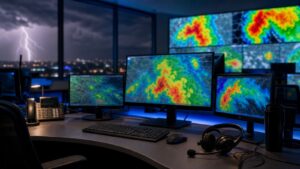
Live Storm Tracking Explained: How Meteorologists Predict Severe Weather in Minutes
Live storm tracking predicts severe weather in minutes by combining radar trends, storm environment, reports, warning thresholds, and rapid human judgment.