
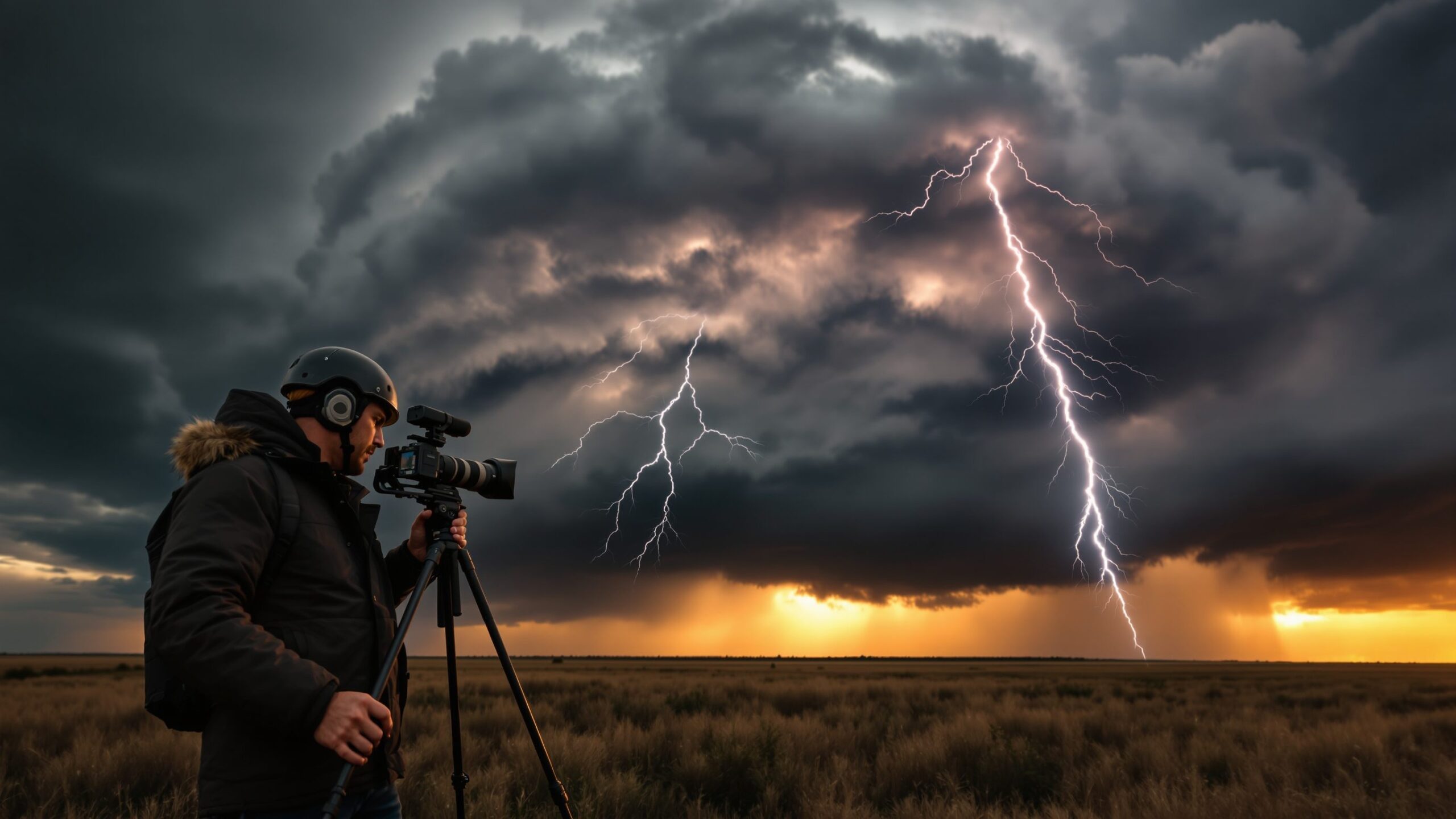
Weather Photographers captures the fearless artists who chase storms, sunlight, clouds, and climate extremes to document the raw power and breathtaking beauty of Earth’s atmosphere. From towering supercells rolling across open plains to delicate frost patterns forming at dawn, these visual storytellers blend scientific awareness with creative vision to freeze fleeting moments in time. On Weather Streets, this subcategory explores the lives, techniques, gear, and unforgettable journeys of photographers who brave harsh winds, lightning-filled skies, scorching deserts, and frozen landscapes to reveal nature’s most dramatic moods. You’ll discover how weather photography helps scientists study storms, inspires public awareness about climate change, and transforms everyday forecasts into awe-inspiring visual experiences. Through in-depth features, interviews, and stunning imagery, we spotlight the pioneers and modern innovators who turn weather into art while preserving its scientific value. Whether capturing hurricanes from the coast, auroras in polar skies, or rain-soaked cityscapes glowing at night, Weather Photographers showcases the passion, precision, and adventure behind some of the world’s most powerful atmospheric images.
A: It can be—always prioritize safety and distance.
A: Wide-angle or telephoto depending on distance.
A: Weather sealing and rain covers help.
A: Late afternoon to evening is common.
A: Using radar and weather models.
A: They can, but pro cameras perform better.
A: Helpful but not required.
A: Several miles whenever possible.
A: Some do with strict safety plans.
A: Yes, they document storm structure.