


UV Levels Explained: How Sunlight Affects Your Health and Climate
Ultraviolet light is more than sunshine—it’s a hidden force influencing your skin, mood, and even the planet’s climate. Explore how UVA, UVB, and UVC rays shape life on Earth, the role of the ozone layer, and the balance between sunlight’s healing and harmful effects. Understanding UV means seeing the sun in a whole new light.

The Magic of Aurora Borealis: Solar Winds in Earth’s Sky
Step into the glowing realm of the Aurora Borealis, where solar winds ignite Earth’s atmosphere in waves of color and motion. From ancient legends to cutting-edge science, explore how this cosmic ballet connects our world to the Sun’s radiant power—a dance of energy, light, and wonder that turns the night sky into living art.

The Role of the Ozone Layer in UV Protection
High above Earth, the ozone layer acts as an invisible guardian, absorbing the Sun’s harmful ultraviolet radiation. This vital atmospheric shield not only protects human health but sustains ecosystems, oceans, and climate balance. Explore how it works, how it was nearly destroyed, and how global cooperation helped it recover — saving life as we know it.

The Power of Solar Radiation: Energy, Climate, and Human Life
From fueling photosynthesis to driving climate systems and renewable innovation, solar radiation is the heartbeat of Earth’s existence. Explore how this cosmic energy shapes weather, sustains life, and powers a brighter, sustainable future—where sunlight becomes civilization’s ultimate resource.

UV Index Today: What High Solar Radiation Means for Your Skin and Health
A high UV index means sunlight can damage skin and eyes faster than temperature suggests. Learn how to read today’s UV risk and plan safer time outdoors.
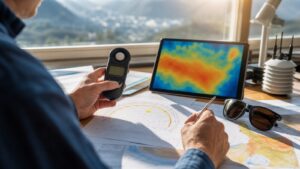
How to Read the UV Index Forecast Like a Meteorologist
Reading the UV index like a meteorologist means looking beyond the peak number. Learn how sun angle, clouds, elevation, ozone, and reflection shape the forecast.

Daily UV Forecast Explained: When Sun Exposure Becomes Dangerous
The daily UV forecast becomes dangerous when intensity, time, exposed skin, reflection, and personal sensitivity line up. Here is how to recognize that point.