
Why Today’s UV Index Deserves Its Own Forecast
The UV index tells you something temperature cannot: how strongly ultraviolet radiation from the sun can affect your skin and eyes at a particular place and time. A cool breezy day can still carry a high UV index, and a hot humid afternoon can be less intense if clouds, haze, or sun angle reduce the radiation reaching the ground. That is why checking today’s UV index is different from glancing at the high temperature. It helps you decide when uncovered skin needs protection, when children should take shade breaks, when sunglasses matter, and when a short errand can still deliver enough exposure to cause sunburn. High UV is not only a beach problem. It affects gardeners, runners, construction crews, festival crowds, mountain hikers, people waiting at bus stops, and anyone who spends part of the day under open sky. The practical question is not whether sunlight is good or bad. It is how strong the ultraviolet portion is today, how long you will be exposed, and how well your habits match the risk.
A: Yes, especially under thin or broken cloud cover that still lets strong UV through.
A: Not always. UV usually peaks near solar noon, while air temperature may peak later.
A: Yes. Burn risk differs, but eyes and long-term skin health still matter.
A: Often yes, because hats do not block reflected light from water, snow, or pavement.
A: After sweating, swimming, towel drying, or extended time outdoors.
A: Protection is commonly recommended once the index reaches 3 or higher.
A: Shade helps greatly, but reflection and side light can still reach exposed skin.
A: Higher elevation leaves less atmosphere above you to absorb ultraviolet radiation.
A: No. A tan is a sign of skin response to UV injury and offers limited protection.
A: Yes, especially for long shifts with repeated direct sun exposure.
What the UV Index Actually Measures
The UV index is a scale for the sunburn-producing strength of ultraviolet radiation at the surface. It emphasizes the wavelengths most closely linked with skin damage, then expresses the result as a simple number. In daily forecasts, low values usually call for ordinary awareness. Moderate and higher values mean protection becomes more important, especially near midday. Once the index reaches high, very high, or extreme categories, unprotected skin can burn quickly.
That number is not a direct measure of heat. Heat comes from a broader energy balance involving air temperature, humidity, wind, ground surfaces, and infrared radiation. UV exposure comes from solar angle, ozone, elevation, cloud cover, reflection, and atmospheric clarity. A person can feel comfortable in a mountain breeze while receiving intense UV because thinner air and higher elevation allow more radiation to reach the skin.
The index is also local. Today’s value in Phoenix, Denver, Miami, and Seattle can differ for reasons that have nothing to do with how warm the afternoon feels. Latitude, season, altitude, cloud texture, and air pollution all change the amount of UV that reaches people on the ground.
Why High UV Can Harm Skin Before You Feel Hot
Sunburn is a delayed warning. By the time skin looks pink, the biological damage has already started. UVB radiation is especially effective at causing sunburn, while UVA penetrates more deeply and contributes to long-term skin aging and some forms of damage even when a burn is not obvious. The UV index is useful because it warns before the body gives clear feedback.
People often judge sunlight by comfort. If a breeze is cool, if the air is dry, or if clouds soften the glare, the risk can feel lower than it is. Thin clouds can still allow substantial UV through, and broken clouds can create moments of enhanced brightness as sunlight scatters around cloud edges. Snow, sand, pale concrete, and water can reflect UV back toward the face, neck, and eyes.
Skin tone influences sunburn timing, but it does not make UV harmless. People with darker skin may burn less easily, yet cumulative exposure can still affect eyes, immune response in the skin, and long-term skin health. The safest message is not one-size-fits-all panic. It is that today’s UV index should guide the level of protection for the person, activity, and exposure time.
How To Match Protection to Today’s Number
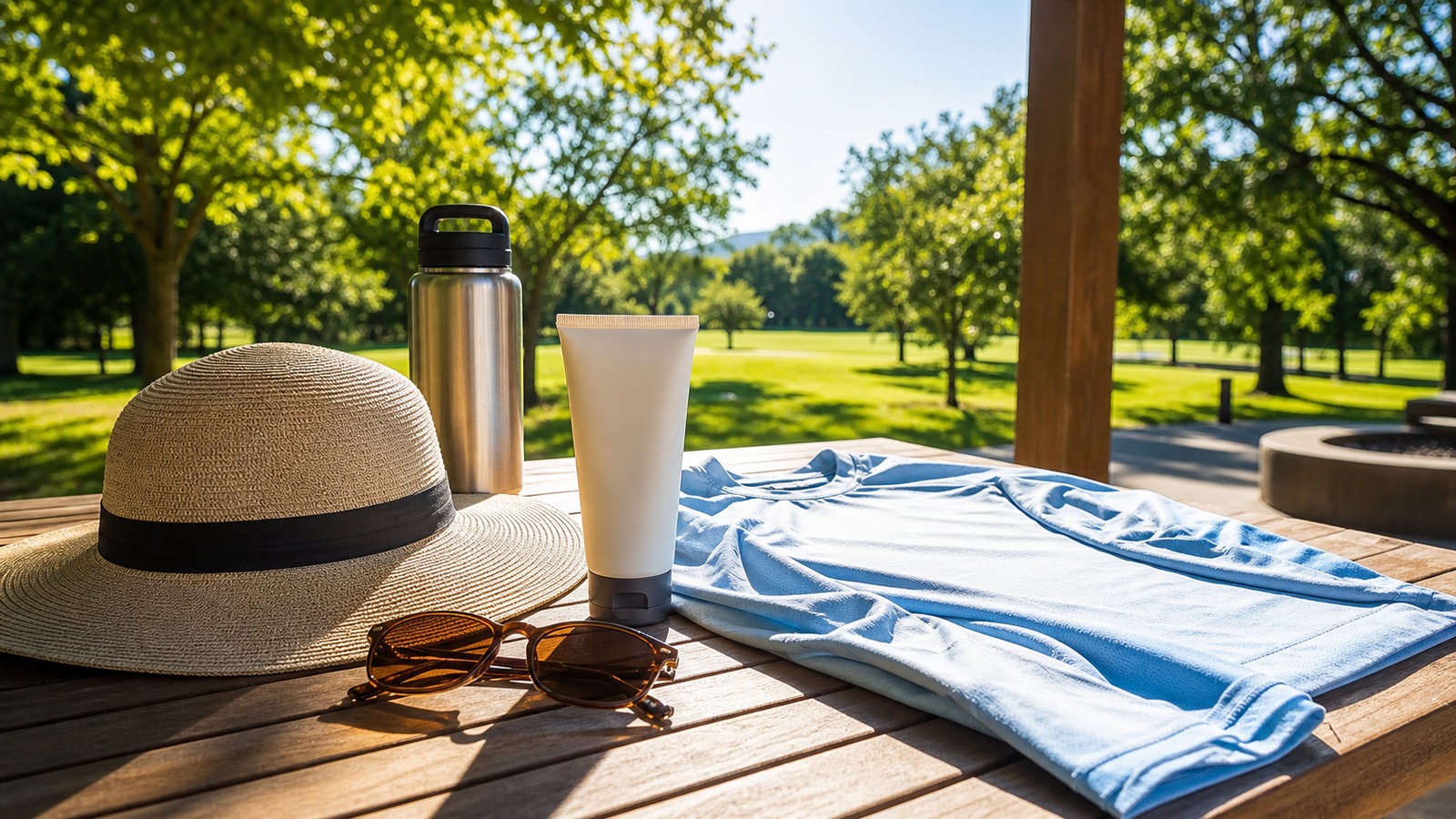
When the UV index is low, many people can handle short routine exposure without special planning. When it reaches 3 or higher, sun protection becomes a reasonable daily habit. That can mean shade, clothing coverage, a brimmed hat, UV-blocking sunglasses, and broad-spectrum sunscreen on exposed skin. The higher the number climbs, the less margin there is for forgetting one of those layers.
At high and very high values, timing becomes the strongest tool. The sun’s UV rays are generally most intense around the middle of the day, especially in the hours surrounding solar noon. Moving a run, yardwork, dog walk, or outdoor meal earlier or later can reduce exposure without canceling the day. If midday outdoor time is unavoidable, protection should be treated as equipment, not decoration.
Sunscreen works best when people use enough, apply it before exposure, and reapply after sweating, swimming, or towel drying. A high SPF does not turn a full afternoon in direct sun into a risk-free plan. It is one layer in a broader strategy. Clothing, shade, and timing are often more reliable because they do not depend on perfect application.
Eyes Need UV Protection Too
The UV index is usually discussed as a skin forecast, but eyes also need attention. Strong UV exposure can irritate the surface of the eye and contribute to longer-term problems. Bright reflection from water, snow, sand, or pavement increases the need for sunglasses that block UVA and UVB. Dark lenses without UV protection are not the same thing because they reduce visible glare without necessarily blocking invisible radiation.
Children’s eyes deserve special care because they may spend long periods outdoors and may not complain until the glare is uncomfortable. Hats help, but sunglasses with proper UV protection add another barrier, especially during sports, beach days, boating, snow travel, and high-elevation outings. People who wear contacts should still consider sunglasses unless their eye-care product specifically provides adequate coverage.
Why Some Days Surprise People
Spring can produce deceptive UV days because the air may still feel mild while the sun angle is climbing quickly. Early summer can bring the strongest solar radiation of the year before many people have adjusted their habits. High elevation can also surprise visitors who dress for cool air and forget that less atmosphere means stronger radiation.
Clouds are another source of confusion. Thick overcast usually lowers UV, but not all cloudy skies behave the same way. Bright thin cloud cover can leave the UV index in a range that still requires protection. Patchy clouds can alternate between relief and sudden intense sun. If your shadow is sharp, UV is probably still strong enough to respect.
Reflection changes the exposure pattern. A person under an umbrella at the beach may still receive UV from sand and water around them. A skier can burn under the chin or nose from snow reflection. A city walker can receive added glare from pale sidewalks and glassy surfaces. The UV index starts the decision, but the setting refines it.
Building a Daily Sun-Risk Routine
A useful routine begins with the forecast. Check the peak UV index, then ask when you will actually be outside. If your only exposure is an early commute, the peak may not matter much. If you supervise a noon practice, pour concrete, work a patio shift, or hike above tree line, the same forecast becomes much more important.
Next, prepare the obvious items before leaving: hat, sunglasses, protective clothing, sunscreen, water, and a shade plan. This is especially helpful for children because forgotten protection usually becomes visible only after the burn has started. For outdoor workers, employers and crews can treat high UV as a scheduling and personal protective equipment issue, much like heat or lightning risk.
Finally, avoid turning UV protection into an all-or-nothing decision. You do not need to fear the sun to respect the index. Outdoor time supports health, mood, and daily life. The goal is to keep the benefit while reducing avoidable damage. Today’s UV index gives you the timing and intensity clues to do that intelligently.
When High UV Becomes a Bigger Health Concern
Certain situations deserve extra caution. People taking medications that increase sun sensitivity should follow medical guidance and may need stronger protection even at moderate UV levels. People with a history of skin cancer, frequent burns, or immune suppression may also need a lower threshold for shade and coverage. Babies and very young children should be protected carefully because their skin is more vulnerable and they cannot manage exposure themselves.
Heat and UV can overlap, but they require different responses. Shade helps both. Hydration helps heat more than UV. Sunscreen helps exposed skin but does not prevent overheating. A safe summer plan often needs to address both forecasts at once: solar radiation for burn and eye risk, temperature and humidity for heat stress, and air quality for breathing conditions.
The best sign that you are using the UV index well is not avoiding every bright day. It is making small adjustments before the damage is obvious: taking the shaded side of the street, reapplying sunscreen before a second swim, choosing long sleeves for a high-altitude hike, or moving a child’s outdoor play away from the strongest hours.
Reflected UV Changes the Shape of Exposure
Direct sunlight is only part of the exposure story. Reflected UV can reach skin from below or from the side, which is why people sometimes burn under the brim of a hat, beneath a beach umbrella, or on the underside of the chin during snow travel. Reflection does not always feel like heat. Pale sand, water, snow, and concrete can look merely bright while they quietly increase the dose reaching the face and eyes.
This matters most when people assume shade has solved the entire problem. Shade is excellent, but it is strongest when combined with surrounding cover, clothing, and eye protection. A tree canopy over grass behaves differently from a small umbrella over reflective sand. A shaded boat deck is different from a shaded porch. The UV index gives the day’s baseline risk, while the surface around you decides how much radiation bounces into places you did not think to protect.
Different Days Need Different Habits
A commuter may only need sunglasses, covered shoulders, and a short walk on the shaded side of the street. A lifeguard, roofer, camp counselor, or landscaper needs a more durable plan because exposure repeats hour after hour. A parent at a tournament needs supplies that last beyond the first game: extra sunscreen, shade, hats, water, and a plan for siblings who are not competing but are still sitting in the sun.
Recreation can be the trickiest category because people are relaxed and distracted. Swimming removes sunscreen faster. Hiking changes elevation and shade. Boating adds reflection and wind that makes sunburn harder to feel. Outdoor dining turns “just lunch” into an hour of direct exposure. When today’s UV index is high, the safest habit is to match protection to the full outing, not the first few minutes.
That habit becomes easier when sun protection lives where decisions happen. Keep sunscreen near sports bags, sunglasses by the door, spare hats in the car, and lightweight cover-ups with beach or pool gear. The less you have to remember at the last second, the more likely today’s UV forecast turns into actual protection. Good sun planning should feel ordinary, like checking the chance of rain before carrying an umbrella. The forecast is most useful when it changes behavior safely before discomfort appears outside.


