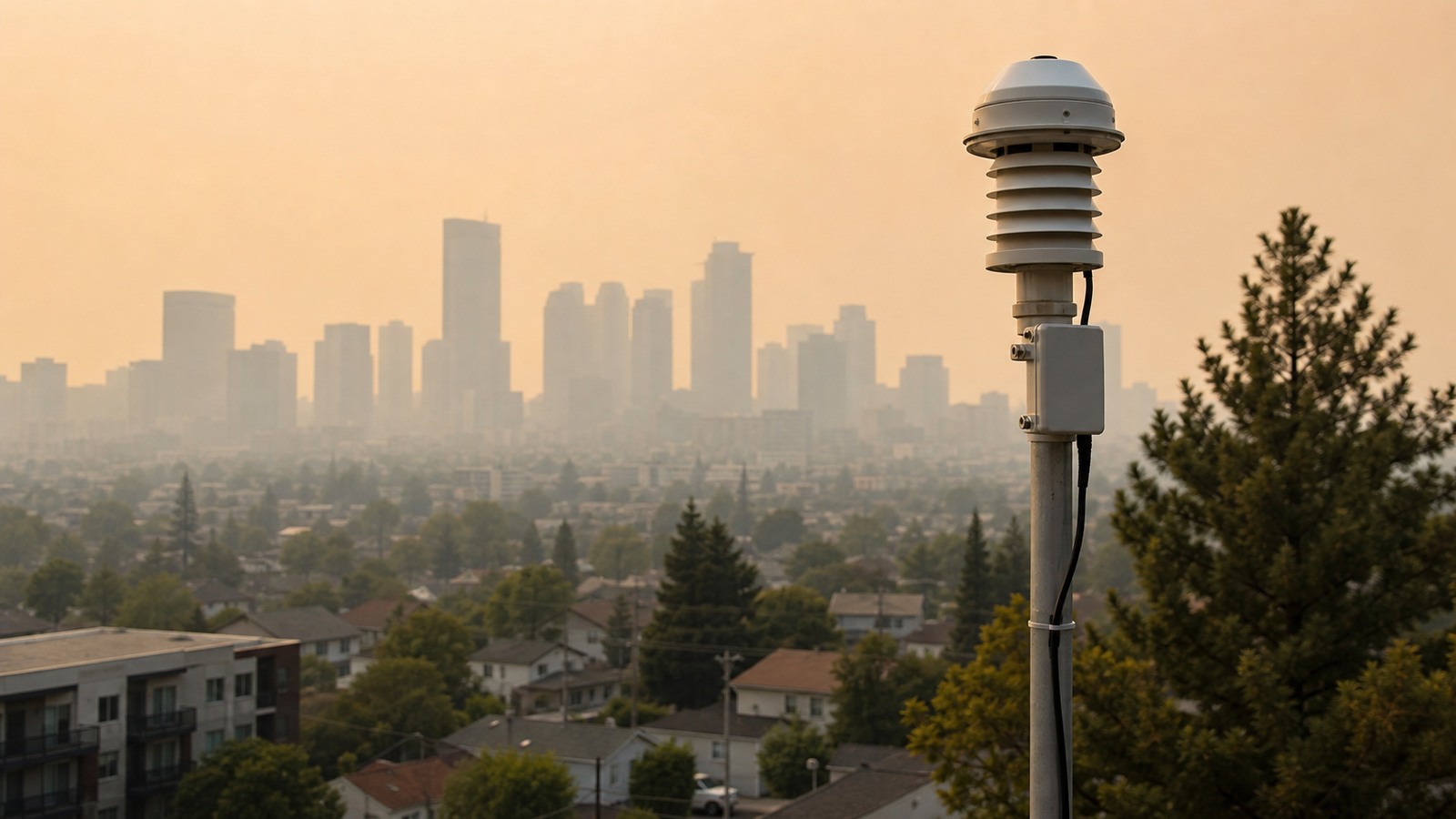
Breathing the Invisible: Why Air Quality Matters
Every breath you take contains an invisible story. It’s a story of gases, particles, and chemical reactions happening above the streets and within the skies. Air is life’s most constant companion, yet it’s easy to forget that not all air is created equal. Across cities, suburbs, and rural landscapes, the Air Quality Index (AQI) serves as a kind of daily report card for the atmosphere — a scale that quantifies how clean or polluted the air is. But what do those numbers actually mean? How can a figure like “72” or “154” define the difference between a good day for a jog and a day better spent indoors? The AQI is more than just a numerical gauge; it’s a reflection of environmental health and human vulnerability. Understanding how it works opens a window into the unseen world of air composition, pollution sources, and the delicate balance between natural processes and industrial impact.
A: Anything under 50 is considered healthy for everyone.
A: Some use real-time raw data, others apply EPA averaging methods—sources and calibration matter.
A: Limit outdoor time, close windows, use HEPA filtration, and wear N95 masks outdoors.
A: Only if doors and windows are sealed and air purifiers are running effectively.
A: Most official stations update hourly; some consumer devices refresh every 5–15 minutes.
A: Yes—data feeds or averaging times can create short-term mismatches.
A: Calm air and cooling layers trap pollutants near the ground until morning mixing clears them.
A: Some industrial regions in India and China have exceeded 800 during severe smog crises.
A: Replace filters regularly, avoid candles and incense, and reduce indoor smoking or frying.
A: They help with CO₂ balance, but mechanical HEPA filters are far more effective for pollutants.
The Language of Air: What Is the Air Quality Index?
The Air Quality Index translates complex environmental data into a simple, color-coded number. It’s an international system, though methods and scales vary slightly by region. In the United States, the Environmental Protection Agency (EPA) developed the AQI to help the public easily interpret air pollution levels and understand potential health risks.
At its core, the AQI converts scientific measurements — concentrations of key pollutants — into a single value between 0 and 500. The lower the number, the cleaner the air. As the number climbs, so does the level of concern. The scale is divided into categories ranging from “Good” (0–50) to “Hazardous” (301–500), each with corresponding health advisories and color codes. Green means you can breathe easy. Red means it’s time to take precautions.
This simple system masks an intricate process of atmospheric monitoring. Behind each AQI report are hundreds of sensors, laboratories, and algorithms translating raw data into public guidance. It’s a daily synthesis of science and communication — a bridge between environmental monitoring and human behavior.
The Pollutants Behind the Numbers
The AQI doesn’t measure “air” in general — it measures specific pollutants known to have major impacts on health and climate. The most common ones are ground-level ozone (O₃), particulate matter (PM₂.₅ and PM₁₀), carbon monoxide (CO), sulfur dioxide (SO₂), and nitrogen dioxide (NO₂). Each tells a different story about the sources and consequences of air pollution.
Ground-level ozone is a paradox. It’s beneficial in the upper atmosphere, where it protects life from ultraviolet radiation, but harmful near the ground, where it forms from the reaction of sunlight with vehicle exhaust and industrial emissions. On hot, sunny days, cities often see ozone spikes that can irritate lungs and trigger asthma.
Particulate matter, or PM, refers to tiny particles suspended in the air — a mix of dust, soot, smoke, and chemical droplets. PM₂.₅ (particles smaller than 2.5 micrometers) is particularly dangerous because it can penetrate deep into the lungs and even enter the bloodstream. Wildfires, power plants, and even cooking contribute to PM levels.
Carbon monoxide is an odorless gas produced by incomplete combustion, often from cars or heating systems. High concentrations reduce the blood’s ability to carry oxygen, posing serious risks for people with heart disease.
Sulfur dioxide and nitrogen dioxide come largely from burning fossil fuels. They irritate the respiratory system and contribute to acid rain and smog. When mixed with water vapor and sunlight, these gases transform into secondary pollutants that can persist in the atmosphere long after the original emissions fade. Together, these pollutants form a complex chemical soup that changes hour by hour, city by city. The AQI simplifies that chaos into a single snapshot of current conditions.
Decoding the Scale: What Do the Numbers Mean?
Understanding the AQI scale is like learning to read the weather forecast for your lungs. Each range corresponds to both a color and a health message:
- 0–50 (Good): The air is clean, posing little or no risk.
- 51–100 (Moderate): Acceptable, though sensitive individuals may feel mild irritation.
- 101–150 (Unhealthy for Sensitive Groups): Children, the elderly, and those with respiratory conditions should limit outdoor activity.
- 151–200 (Unhealthy): Everyone may begin to feel effects; sensitive groups will experience stronger symptoms.
- 201–300 (Very Unhealthy): Health alerts are issued; outdoor exposure should be minimized.
- 301–500 (Hazardous): Emergency conditions; the air is unsafe for anyone to breathe.
The scale’s simplicity is deliberate. You don’t need to understand micrograms per cubic meter or parts per billion — just whether you can safely go for a run or if you should keep the windows closed.
Interestingly, the highest recorded AQI readings in history have occurred during major wildfire events or dust storms, with some exceeding 800 in parts of Asia and Australia — far beyond the “hazardous” category. These extreme values remind us how fragile our atmosphere can be under the strain of both natural disasters and human activity.
The Science of Measurement: How AQI Is Calculated
Beneath the surface of those numbers lies a sophisticated network of monitoring stations. These stations, often operated by environmental agencies, continuously sample air and measure pollutant concentrations. Each pollutant has its own standardized calculation method, converting raw readings into a normalized index value.
For instance, ozone levels are averaged over eight hours, while particulate matter is often averaged over 24 hours. Each pollutant’s index value is then compared against established thresholds. The final AQI for the day is the highest value among all pollutants — meaning the most concerning pollutant determines the headline number.
This “worst-case” approach ensures that health warnings err on the side of caution. It also means that two cities could have the same AQI but very different pollutant profiles. One might be dominated by ozone on a sunny day; another by particulate matter from nearby fires or dust. Understanding that nuance helps people make informed choices about exposure and mitigation.
When the Sky Turns: The Role of Weather and Geography
Air quality doesn’t exist in isolation; it dances with the weather. Temperature, humidity, wind speed, and topography all influence how pollutants behave. On still days with temperature inversions — when a layer of warm air traps cooler air near the ground — pollution can accumulate rapidly, turning cities into smog chambers. Coastal breezes can sweep pollutants away, while valleys can hold them hostage. Rain often acts as a natural purifier, washing particulates from the air, but droughts and heatwaves can worsen pollution levels by promoting ozone formation and wildfire smoke.
Geography plays a defining role, too. Cities like Los Angeles and Mexico City, ringed by mountains, often experience trapped smog, while flat, windy regions see pollutants disperse more quickly. The interplay between local emissions and meteorology creates unique “air personalities” for each location.
Health Impacts: Breathing Beyond the Numbers
The reason the AQI matters is simple — it connects atmospheric data to human well-being. Poor air quality is linked to a host of short- and long-term health effects, from minor irritations like coughing or watery eyes to chronic diseases such as asthma, heart disease, and even cognitive decline.
Children are especially vulnerable because their lungs are still developing, and they breathe faster than adults. The elderly, pregnant women, and people with preexisting conditions also face higher risks. Even healthy individuals can experience reduced lung function during periods of high pollution, particularly during exercise when deeper breathing draws pollutants further into the lungs.
Recent studies have gone further, connecting poor air quality to increased risks of dementia, stroke, and metabolic disorders. Fine particulates can travel through the bloodstream, triggering inflammation throughout the body. The implications are profound — the air we breathe doesn’t just affect our lungs, it touches nearly every organ system.
Global Variations: How AQI Differs Around the World
While the concept of an air quality index is universal, the specific calculations and thresholds vary. The U.S. EPA’s system may differ from the European Air Quality Index or China’s AQI. For instance, what counts as “moderate” in one country could be considered “unhealthy for sensitive groups” in another.
China’s index extends up to 500 but sometimes records values far beyond that during severe pollution episodes. India uses the National Air Quality Index (NAQI), incorporating additional pollutants like ammonia and lead. The European Union uses a different scaling system but a similar color-coded communication strategy.
These differences reflect both environmental conditions and policy priorities. However, global efforts are underway to standardize reporting and make data comparable across borders. Air doesn’t respect political boundaries, and pollution often drifts from one country to another, carried by jet streams and trade winds.
The Digital Age of Air Awareness
Technology has transformed how we interact with air quality data. What once required specialized reports can now be checked on your smartphone in seconds. Apps and smart devices integrate AQI data into weather forecasts, wearable fitness trackers, and even home automation systems that adjust air purifiers based on outdoor readings.
Satellite imagery provides a bird’s-eye view of pollution plumes, while low-cost personal sensors allow citizens to contribute to local air monitoring networks. This democratization of data empowers individuals and communities to take action — from choosing when to exercise outdoors to advocating for cleaner energy policies. In cities like Beijing and Delhi, where pollution often dominates headlines, real-time AQI displays on public billboards and smartphone notifications have become part of daily life. What was once abstract science is now a visible social signal.
From Policy to Prevention: The Power of Public Awareness
The AQI is more than just an informational tool; it’s a driver of change. Public access to clear, standardized air data has helped shape environmental policies worldwide. When people can see the tangible health risks associated with pollution, support for clean air initiatives grows.
Governments use AQI trends to regulate emissions, enforce industrial standards, and design urban planning strategies. For example, traffic restrictions during smog events in major cities are often triggered by AQI thresholds. Schools adjust outdoor activities, and hospitals prepare for surges in respiratory cases.
At the individual level, awareness leads to adaptation. People may install HEPA filters, avoid wood-burning stoves, or use masks during high-pollution days. While personal actions can’t solve systemic pollution, they contribute to resilience and public demand for broader solutions.
Natural Versus Human-Made Pollution: Untangling the Sources
Not all air pollution originates from factories or cars. Nature itself contributes — volcanic eruptions release sulfur dioxide, wildfires emit vast quantities of particulate matter, and dust storms transport fine particles across continents. However, human activities amplify and accelerate these processes. The combustion of fossil fuels, industrial emissions, agriculture, and deforestation collectively alter atmospheric chemistry. The result is a persistent background haze in many urban areas, even without visible smoke or smog. Understanding the distinction between natural and anthropogenic sources helps policymakers target interventions effectively. While we can’t control volcanoes, we can control tailpipe emissions and industrial waste.
Air Quality and Climate Change: A Two-Way Relationship
Air quality and climate change are deeply intertwined. Many air pollutants, such as black carbon and methane, also act as climate forcers, influencing temperature and weather patterns. Conversely, a warming planet can exacerbate air pollution through heat-driven ozone formation and increased wildfire frequency.
Efforts to reduce greenhouse gas emissions often yield air quality co-benefits. Transitioning to renewable energy, for instance, cuts both carbon dioxide and particulate emissions. The synergy between climate policy and clean air initiatives underscores the shared urgency of these challenges.
Breathing Solutions: The Future of Cleaner Air
Technology and innovation are paving new paths toward improved air quality. Electric vehicles, clean energy grids, and green urban infrastructure all contribute to emission reduction. In some cities, “urban lungs” — parks and green walls designed to absorb pollutants — are becoming integral parts of sustainable planning.
Emerging filtration technologies can capture fine particulates from industrial exhaust, and scientists are exploring atmospheric interventions such as photocatalytic surfaces that neutralize pollutants when exposed to sunlight. Education remains the most powerful tool. As public understanding of AQI deepens, so does collective motivation to demand cleaner air. What begins as a number on a screen can evolve into global action for environmental justice.
Reading the Air: Making AQI Part of Everyday Life
In the end, the Air Quality Index is a language — a translation of atmospheric science into human terms. By checking it regularly, people learn to interpret the invisible forces shaping their environment. It’s not about fear but empowerment: knowing when to open the windows, when to go for a run, and when to call for change. Air connects us all. The same molecules drift across oceans and mountains, linking one person’s breath to another’s world away. Understanding what those AQI numbers mean transforms awareness into stewardship — a reminder that clean air isn’t just a privilege, it’s a shared responsibility.