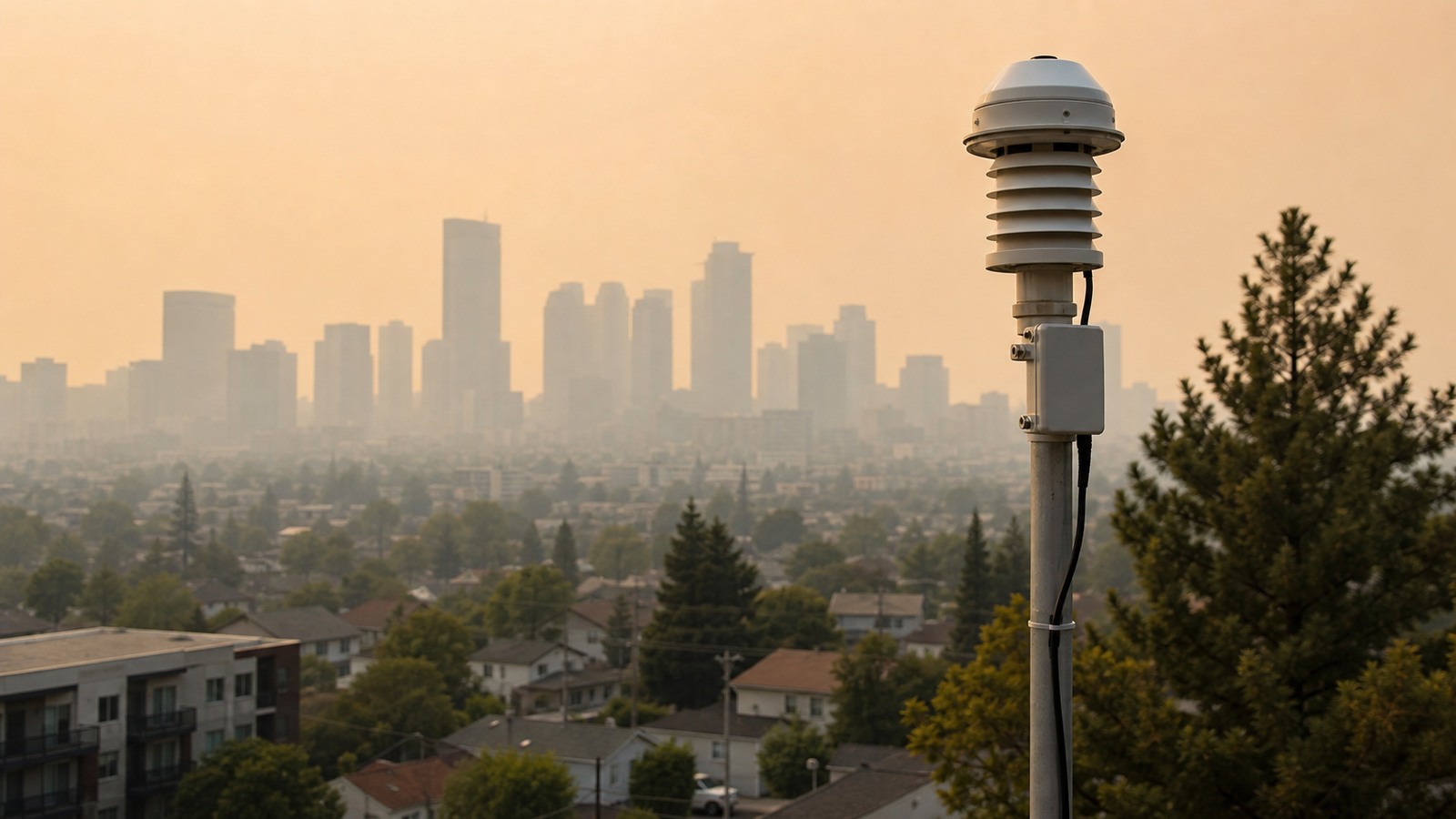
The Soft Veil of Earth’s Breath
In the quiet hours of dawn, before sunlight cuts through the horizon, the world often wears a soft, mysterious cloak. Fields shimmer with silver droplets, valleys hold pale veils of mist, and mountain roads disappear into blankets of fog. Though these ethereal phenomena may seem simple—just water in the air—they are actually the product of intricate physical forces and delicate atmospheric balances. The dance between air temperature, humidity, and surface conditions gives rise to some of the most mesmerizing sights on Earth. Fog, mist, and dew are not just weather events—they are moments when the invisible becomes visible, when the hidden workings of the atmosphere manifest in tangible form. To understand them is to glimpse the secret chemistry of Earth’s breath and the unseen architecture of the air that surrounds us.
A: Primarily visibility—fog reduces it below 1 km, mist stays above that threshold.
A: Because humidity is higher and temperature gradients promote condensation.
A: Rarely—sunlight warms surfaces and evaporates droplets faster than they can form.
A: Solar heating mixes and dries the air, lifting fog into low stratus clouds or dispersing it.
A: Pure fog isn’t—but polluted fog can carry particulate matter that irritates lungs.
A: Grass cools faster by radiation, allowing earlier condensation.
A: Not usually—fog droplets are too small to coalesce into raindrops without strong uplift.
A: Droplets scatter light in all directions—use low beams for better visibility.
A: Many apps estimate fog risk using humidity, temperature, and dew point proximity.
A: Through “dense fog advisories” issued when visibility drops below a quarter-mile.
The Science of Suspended Water
At the core of all three phenomena lies one fundamental process: condensation. When air cools to its dew point—the temperature at which it can no longer hold all the water vapor it contains—moisture condenses into tiny droplets. These droplets are so small they can remain suspended in the air (as in fog and mist) or collect on surfaces (as in dew).
The dew point varies depending on humidity. On a humid night, air reaches saturation more easily, allowing fog or dew to form with minimal cooling. On dry nights, however, air can cool significantly without condensing. The invisible humidity surrounding us becomes the stage for the delicate balance between vapor and liquid, one determined by microphysics but expressed through some of nature’s most poetic visuals.
Condensation nuclei—microscopic particles like dust, salt, or pollution—play a hidden yet crucial role. Without them, water vapor would struggle to condense at typical atmospheric temperatures. These minute particles serve as anchors, allowing droplets to coalesce and persist. The next time you walk through a foggy morning, remember that you’re actually moving through a suspension of billions of tiny water droplets clinging to invisible dust motes.
Dew: The Ground’s Nocturnal Alchemy
Dew is perhaps the gentlest expression of condensation. It forms during calm, clear nights when the ground radiates heat away into the sky, cooling faster than the surrounding air. As the surface temperature drops below the dew point of the nearby air, water vapor condenses onto grass, leaves, cars, and rooftops, forming glistening beads of moisture. This process—called radiational cooling—relies heavily on stillness. A windy night disperses the cooling layer, preventing the air near the surface from saturating. That’s why dew often graces the calmest, most tranquil mornings.
Beyond its poetic beauty, dew has played a vital role in ecosystems and human survival. In arid environments, plants and insects have evolved to harness dew as a critical water source. The Namib Desert beetle, for example, positions its body at an angle to capture moisture from fog and dew, channeling it toward its mouth. Some ancient civilizations even built dew collectors—stone or metal structures designed to condense atmospheric moisture into usable water. In the modern world, this principle is being revisited through atmospheric water harvesting technology, offering a sustainable way to collect water in drought-prone regions. When you see dew shimmering at sunrise, you’re witnessing Earth’s natural water reclamation system in action—a reminder that even in the stillness of night, energy and transformation continue.
Mist: The Whisper Between Worlds
Mist is fog’s lighter cousin—a more transparent veil that still softens the world’s edges. While dew forms on surfaces, mist forms in the air, usually when warm, moist air cools rapidly near the ground. The droplets that make up mist are smaller and less concentrated than fog’s, giving it a ghostlike, fleeting quality. Mist often occurs in the transition periods of dawn and dusk. Lakes and rivers frequently exhale mist when their warm surfaces meet cool morning air, creating ethereal scenes where water and atmosphere merge. This interplay of temperature and humidity is what makes mist so common in valleys and near bodies of water.
From a physics standpoint, mist forms when the air is nearly saturated—its relative humidity approaching 100%—but not quite dense enough to obscure visibility completely. The boundary between mist and fog is defined by visibility: meteorologists typically classify visibility of more than one kilometer as mist, and less than one kilometer as fog. In literature and art, mist has always symbolized mystery, transformation, and the threshold between worlds. Its ephemeral nature evokes both calm and curiosity, a physical metaphor for uncertainty and imagination. The next time you see mist hovering over a lake, you are witnessing the visible exhalation of the planet, where energy exchange and moisture converge in perfect balance.
Fog: The Cloud That Comes to Earth
When the air becomes fully saturated, and droplets grow dense enough to obscure visibility below one kilometer, mist becomes fog—a cloud resting on the ground. This transformation happens when the cooling of air is either radiative (as during a clear, calm night) or advective (when warm, moist air moves over a cooler surface).
Radiational Fog
This common form of fog appears after calm, clear nights when ground heat radiates away into the sky. The cooling ground chills the air just above it, causing condensation. You’ll often find radiational fog in valleys and low-lying areas where dense air pools overnight.
Advection Fog
This type occurs when moist air moves horizontally over a colder surface, such as when ocean air drifts over a cool coastal current. The classic “sea fog” or “marine layer” blanketing San Francisco is a perfect example—created by the collision of warm Pacific air with the chilly California Current.
Upslope Fog
In mountainous regions, moist air ascending a slope cools adiabatically (through expansion), forming fog along hillsides and ridges. This type often lingers longer than others, sustained by continuous moisture flow and elevation-driven cooling.
Regardless of its origin, fog is both an aesthetic and scientific marvel—a living laboratory of light and water. The way sunlight refracts through fog’s dense droplets can create optical phenomena like fogbows, glories, and even Brocken spectres—eerie, halo-like shadows projected onto the mist when the sun is behind an observer.
The Hidden Energy Exchange
The transformation of water vapor into droplets is not merely visual—it’s a profound energy transaction. When vapor condenses into liquid, it releases latent heat, a small but measurable amount of energy into the surrounding air. This release subtly warms the environment even as fog and dew form in cooling conditions.
This invisible exchange of heat is one of the key forces behind weather systems. The same principle that drives dew on your windowpane also fuels the birth of thunderstorms and hurricanes, where condensation releases immense energy that powers atmospheric circulation. In this way, fog, mist, and dew are microcosmic expressions of planetary dynamics—small, localized manifestations of the same thermodynamic laws that govern global climate.
Understanding these processes also helps meteorologists predict fog formation, which is crucial for aviation and transportation safety. Airports use complex models that factor in temperature gradients, humidity, and wind to forecast low-visibility events. What looks like a tranquil blanket of gray to the naked eye is actually a signal of delicate balance at play between moisture, heat, and motion.
The Role of Surfaces and Microclimates
Every surface interacts differently with atmospheric moisture. Grass and soil cool quickly, promoting dew formation, while concrete and metal retain heat longer, often delaying condensation. Vegetation also influences microclimates by releasing moisture through transpiration, enhancing local humidity levels that favor mist and fog.
Urban environments tend to have less fog and dew due to the urban heat island effect—where heat absorbed by buildings and roads radiates overnight, preventing air from cooling to the dew point. Conversely, rural valleys or forest clearings provide perfect conditions for nocturnal cooling and saturation.
Even subtle variations in terrain can determine whether you wake up to a clear morning or a misty one. This is why farmers have long observed how fog tends to settle in hollows while hills remain clear. These micro-scale interactions remind us that weather is not uniform—it is a deeply local phenomenon, shaped by the land beneath our feet.
When Fog Meets Light: The Art of Diffusion
One of fog’s most mesmerizing qualities lies in how it transforms light. Because fog droplets are close in size to visible wavelengths of light, they scatter it in all directions. This Mie scattering effect softens edges, desaturates colors, and diffuses brightness, creating the dreamlike landscapes photographers chase at dawn.
In cities, fog wraps streetlights in glowing halos; in nature, it turns sunlight into radiant beams filtering through trees—known as crepuscular rays. This interplay of physics and aesthetics is why fog has become a staple motif in art, film, and literature: it reveals the invisible structure of light itself.
Painters like J.M.W. Turner and photographers such as Ansel Adams captured fog not just as a weather event, but as an emotional medium—symbolizing ambiguity, introspection, and beauty emerging from obscurity. In a world obsessed with clarity, fog reminds us of the value of mystery.
Cultural and Historical Echoes of Mist and Dew
Across cultures and centuries, fog, mist, and dew have been imbued with spiritual and poetic significance. In Japanese haiku, morning dew often symbolizes impermanence—the fleeting beauty of life. Celtic mythology saw fog as the boundary between the mortal world and the realm of spirits, while Native American traditions regarded mist as the breath of the Earth, carrying messages between land and sky.
Even in science, these phenomena have inspired curiosity and reverence. Early meteorologists like Luke Howard, who classified clouds in the 19th century, saw fog as a tangible link between weather at the surface and the grand atmospheric systems above. The Greeks believed dew was the offspring of the heavens and the earth—a poetic description surprisingly close to modern thermodynamics.
Fog and mist have also influenced literature and cinema, often serving as atmospheric metaphors for uncertainty or revelation. From Arthur Conan Doyle’s Sherlock Holmes stories set in London’s fog-choked streets to modern thrillers that open in mist-shrouded towns, the mood these phenomena create is unmatched.
The Environmental Significance of These Gentle Phenomena
While they may appear benign, fog, mist, and dew play subtle yet crucial roles in ecosystems and environmental cycles. Fog drip—the moisture that condenses on tree leaves and drips to the forest floor—can account for a significant portion of rainfall in cloud forests. This invisible contribution sustains biodiversity in regions like the Andes and the coastal redwood forests of California.
In arid regions, fog harvesting has become an innovative solution to water scarcity. Using fine mesh nets, communities collect condensed moisture from fog and channel it into reservoirs, providing clean water for agriculture and daily use. This modern adaptation of ancient wisdom demonstrates how understanding atmospheric micro-processes can yield real-world benefits.
Fog also acts as a natural filter, trapping airborne pollutants and cleaning the air near the surface. However, when combined with industrial pollution, it can form smog—a dangerous mixture of smoke and fog that plagued many cities during the early 20th century. Understanding the delicate chemistry of condensation helps scientists mitigate these environmental hazards and protect public health.
From Weather to Wonder: The Human Connection
Beyond science, there’s an emotional resonance to these phenomena that science alone can’t quantify. Fog slows us down—it blurs the rush of modern life, forcing attention inward. Mist softens landscapes and tempers sound, inviting reflection. Dew marks the quiet passage of night into morning, a subtle reminder of cycles larger than ourselves.
These gentle forms of water connect us to the atmosphere in intimate ways. They remind us that the air we breathe is alive with motion and transformation, that invisible forces continuously shape our world. Whether you’re watching fog roll through a valley or brushing dew from a leaf, you are witnessing Earth’s constant dialogue between water and energy, between concealment and revelation.
The Future of Atmospheric Study
With climate change altering global temperature and humidity patterns, understanding fog, mist, and dew has taken on new urgency. Scientists are studying how rising temperatures may reduce fog frequency in coastal ecosystems, potentially threatening habitats that rely on fog moisture. Simultaneously, research into dew collection and fog harvesting is expanding as part of sustainable water initiatives.
New technologies—like high-resolution satellite imaging and automated dew sensors—allow meteorologists to track micro-scale condensation events in unprecedented detail. These studies could help predict not just local weather, but also shifts in regional hydrology and agriculture. The hidden forces behind these delicate phenomena may hold answers to larger environmental challenges.
A World Suspended in Droplets
Fog, mist, and dew remind us that our atmosphere is not just a vast expanse of air—it’s a dynamic, breathing system where invisible forces shape visible beauty. Each droplet, suspended in air or resting on a leaf, is a testament to the delicate interplay of temperature, humidity, and energy that sustains life on Earth. In an age of satellites and supercomputers, these quiet expressions of condensation remain profoundly human experiences. They connect science and sensation, logic and wonder. When the world is wrapped in fog or when dawn reveals dew sparkling across the grass, we are invited to pause—to feel, to see, and to remember that even the softest forces can shape the world.