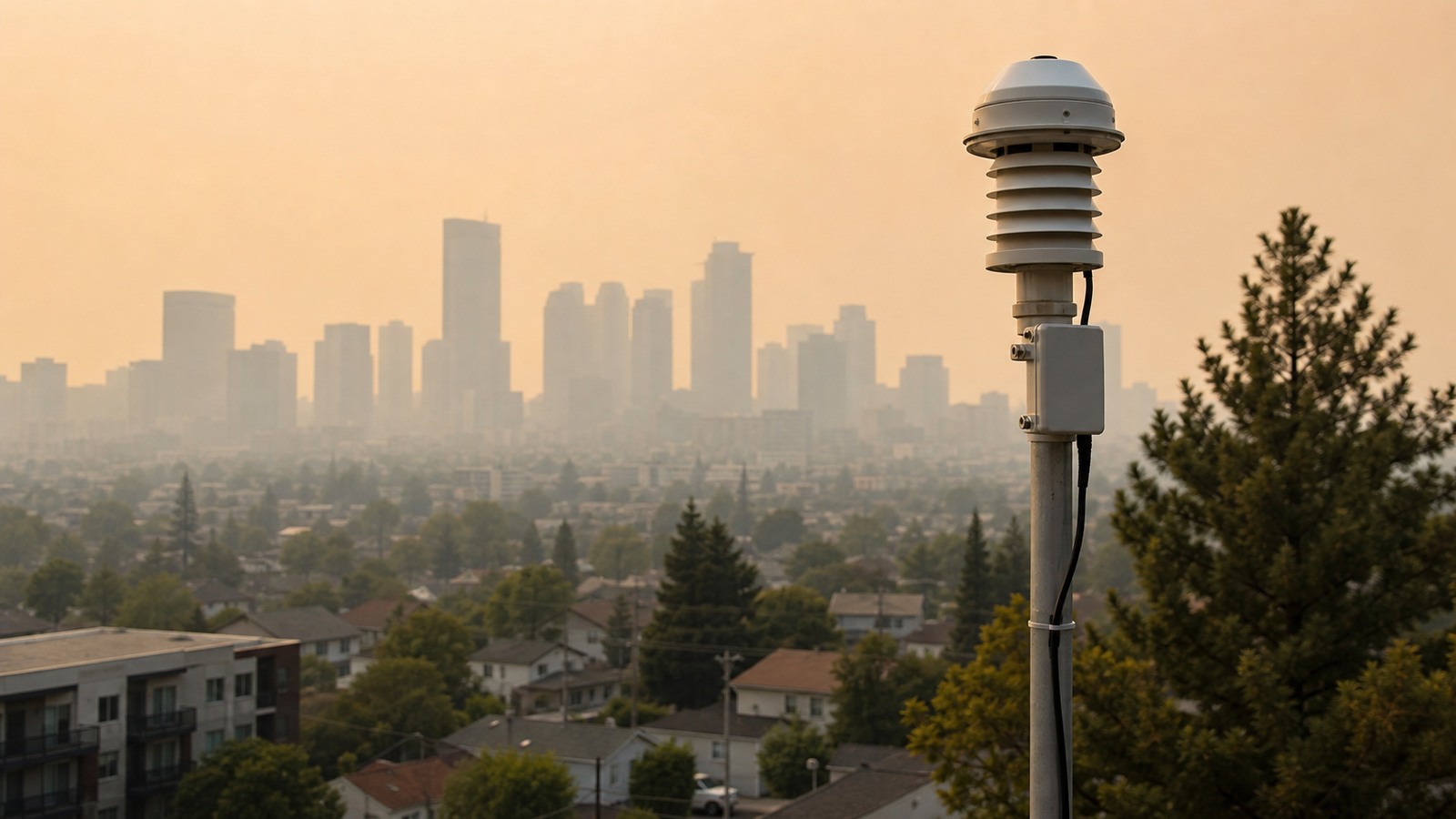
When Air Stops Feeling Invisible
A dangerous AQI level is not just a number on a weather app. It is a signal that the air outside has enough pollution to change what people should do with their day, especially if they have asthma, heart disease, lung disease, pregnancy, older age, very young age, or a job that keeps them outdoors. The Air Quality Index turns measured pollutants into a color-coded scale so a person can quickly understand whether a walk, practice, commute, shift, or school recess is still a normal activity or something that needs adjustment. The higher the AQI climbs above 100, the more the concern expands from sensitive groups to everyone. By the time the index reaches the red, purple, or maroon categories, the question is no longer whether the air looks hazy. The question is how long you need to be outside, how hard you will be breathing, and what practical steps can reduce exposure.
A: It is the edge of the satisfactory range; above it, health concern begins for at least some groups.
A: Sensitive people should avoid hard exertion, and many others should shorten or lighten the workout.
A: A well-fitting N95 can reduce fine particle inhalation, but loose masks are much less protective.
A: Yes, especially in leaky buildings or when indoor activities add particles during a smoke event.
A: Irritation can begin before the index reaches emergency levels, especially during exertion.
A: No. Ozone can be unhealthy under clear blue skies, especially on hot sunny afternoons.
A: Policies vary, but red and higher deserve serious restrictions, with extra caution for sensitive students.
A: Yes. Shorter walks and cleaner indoor air can help animals during smoke or pollution episodes.
A: They may use different sensors, averaging periods, pollutants, or correction methods.
A: Seek advice for severe, unusual, or persistent breathing, chest, or asthma symptoms.
How the AQI Scale Turns Pollution Into a Safety Signal
The AQI scale is designed to translate technical air monitoring into public guidance. Instead of asking people to interpret micrograms of fine particles or parts per billion of ozone, the index places the day’s dominant pollutant on a 0 to 500 scale. Lower values mean the air is generally easier for most people to tolerate. Higher values mean the pollutant concentration is high enough that health effects become more likely, first for sensitive groups and then for the wider public.
In everyday use, the most important break point is 100. Values at or below 100 are generally considered satisfactory for the public, though a small number of unusually sensitive people may still notice symptoms in the moderate range. Once the AQI rises above 100, the air is officially in unhealthy territory for at least some people. That shift matters because it changes the advice from ordinary awareness to active exposure management.
The scale is also pollutant-specific. Fine particle pollution from wildfire smoke behaves differently from ground-level ozone on a hot sunny afternoon, and both behave differently from localized dust or traffic pollution. The displayed AQI usually reflects whichever measured pollutant creates the highest health concern at that time. That is why a city can have a dangerous particle AQI during smoke season even when ozone is not the main issue, or an unhealthy ozone day under blue skies when the air does not look dirty.
Where AQI Becomes Dangerous for Different People
For many households, the practical danger zone begins at AQI 101 to 150, labeled unhealthy for sensitive groups. That category does not mean everyone must stay indoors. It means children, older adults, people with heart or lung disease, pregnant people, and anyone who reacts strongly to pollution should reduce long or heavy outdoor exertion. A short errand may be fine for one person, while a soccer practice or roofing shift could be a poor choice for another.
AQI 151 to 200 is a different level of concern. In the red category, everyone may begin to experience effects, and sensitive groups may experience more serious symptoms. The difference between orange and red is easy to underestimate because both can occur on days when life still looks normal. The safer habit is to treat red days as a reason to shorten outdoor time, move workouts inside, keep windows closed when indoor air is cleaner, and pay attention to symptoms early.
AQI 201 to 300, the purple category, is very unhealthy. At this level, the air is no longer a background condition. It is a health alert. People who normally tolerate moderate pollution may notice throat irritation, coughing, headache, chest tightness, fatigue, or unusual shortness of breath. Outdoor workers, athletes, and people without air conditioning face a harder tradeoff because avoiding exposure may not be simple. The goal becomes reducing dose: less time outside, less exertion, better filtration, and fewer unnecessary trips.
Why the Same AQI Can Feel Worse on One Day Than Another
AQI is a powerful shortcut, but it does not capture every detail of exposure. A value of 135 during a calm smoky morning may feel more oppressive than the same value during a breezy afternoon because the pollution can pool near the ground. A person climbing hills, running intervals, or carrying heavy loads inhales more air per minute than someone sitting quietly, so the effective dose rises even if the published AQI is the same.
Time matters as much as intensity. Ten minutes outside during an unhealthy hour is different from six hours outdoors during a work shift. Indoor conditions also vary. A newer building with good filtration may provide real relief, while a leaky home with open windows may track outdoor smoke closely. That is why the best AQI decision combines the index number with location, duration, activity level, and personal vulnerability.
Common Symptoms That Mean You Should Reduce Exposure
Air pollution can irritate the eyes, nose, throat, and lungs before it feels like a medical problem. Early signs include burning eyes, scratchy throat, coughing, wheezing, or a heavy feeling in the chest. Some people also notice headache, unusual tiredness, dizziness, or difficulty catching their breath during activity that is usually easy. These symptoms are worth taking seriously because they may appear before a person realizes how much polluted air they have inhaled.
People with asthma, COPD, cardiovascular disease, or a history of severe reactions should follow their clinician’s action plan and keep rescue medications accessible. If symptoms are severe, unusual, or do not improve after moving to cleaner air, medical advice is appropriate. AQI guidance is public information, not a substitute for personal medical care, but it can help people avoid waiting until symptoms become urgent.
Children deserve special attention because they breathe more air relative to body size and often exercise outdoors without noticing early warning signs. Coaches, teachers, and caregivers should avoid treating a dangerous AQI as a matter of toughness. Pollution exposure is not a conditioning challenge. It is a dose problem.
What To Do When AQI Is Unhealthy
The first step is to reduce outdoor exertion. Walking calmly to a car is not the same exposure as running, mowing, cycling, or playing a full game. If the AQI is orange, sensitive people should scale back first. If it is red, most people should reconsider strenuous plans. If it is purple or maroon, outdoor activity should be limited to what is necessary whenever possible.
Indoor air becomes the next priority. Close windows and doors when outdoor air is worse than indoor air. Use HVAC recirculation when appropriate, replace dirty filters, and consider a portable HEPA cleaner for the room where people spend the most time. During wildfire smoke, a simple clean-air room can make a meaningful difference: one room, fewer leaks, filtered air, and limited activities that add indoor particles, such as frying, candles, incense, or smoking.
Masks can help in specific situations, but the type matters. A well-fitting N95 or similar respirator can reduce inhaled fine particles when worn correctly. Loose cloth or surgical-style face coverings do far less against smoke particles. Masks also do not solve ozone exposure, and they can be uncomfortable for people with certain health conditions. The safest approach is to combine shorter exposure, lower exertion, cleaner indoor air, and appropriate respiratory protection when it fits the situation.
Wildfire Smoke, Ozone, and the Meaning of a Bad Air Day
Wildfire smoke often drives the most dramatic AQI spikes because fine particles can travel long distances and penetrate deep into the lungs. Smoke can arrive from fires hundreds or thousands of miles away, turning the sky milky even when there is no local flame. It can also change quickly as wind direction, fire behavior, and atmospheric mixing shift through the day.
Ozone is different. It forms in sunlight from chemical reactions involving pollutants such as nitrogen oxides and volatile organic compounds. Ozone episodes often peak during warm, sunny afternoons and may be less visible than smoke. A blue-sky ozone day can still be unhealthy, especially for people exercising outdoors in the heat. Because ozone and particles follow different rhythms, checking the forecast and the current reading can both matter.
How To Make a Practical AQI Plan
A good AQI plan is simple enough to use before the day gets complicated. Decide which number changes your behavior. For a family with a child who has asthma, orange may mean indoor recess, closed windows, and no hard outdoor practice. For a healthy adult, red may be the point where an outdoor run moves to an indoor workout. For an older adult with heart disease, a lower threshold may be wiser.
Keep a few reliable sources bookmarked, such as AirNow, local air agencies, and trusted weather providers. Look at both current AQI and forecast AQI, especially during wildfire season or heat waves. If readings vary between sensors, favor official monitors and broader trends over a single hyperlocal number that may be affected by a nearby grill, road, or sensor issue.
The safest AQI decisions are rarely dramatic. They are small adjustments made early: changing the workout, picking up medication before smoke arrives, checking on a neighbor, running the air cleaner overnight, or moving a child’s birthday party indoors. Dangerous air becomes easier to manage when the plan is made before the sky turns gray.
Current AQI Versus Forecast AQI
Current AQI answers the question, “What is the air like now?” Forecast AQI answers a different question: “What is the air expected to become?” Both are useful, but they should not be treated as identical. A current reading can catch a sudden smoke plume, dust burst, or neighborhood-scale pollution spike. A forecast can warn that afternoon ozone may worsen even if the morning feels comfortable.
During wildfire events, current readings often deserve extra attention because smoke edges can move in uneven bands. One side of a metro area may improve while another gets worse. During ozone season, the forecast can be especially valuable because chemistry and sunlight build the problem over several hours. If the forecast calls for red ozone in the afternoon, the best time for outdoor errands may be morning, not after work.
It also helps to watch the trend. A single AQI number is a snapshot, but three or four readings over a few hours tell a story. If the index is climbing from yellow to orange before noon, sensitive people may want to act before it reaches red. If it is falling steadily after a front passes, a short outdoor window may open later in the day. The smartest AQI choices combine the category, the pollutant, the trend, and the activity you are trying to protect.
When conditions are close to a threshold, choose the more protective option for people who cannot easily opt out later. A school, job site, camp, or outdoor event has less flexibility once everyone has arrived. Building in a cleaner-air backup plan is easier than making a last-minute decision while symptoms are already starting. The goal is not alarm; it is reducing avoidable dose before the air dictates the schedule.