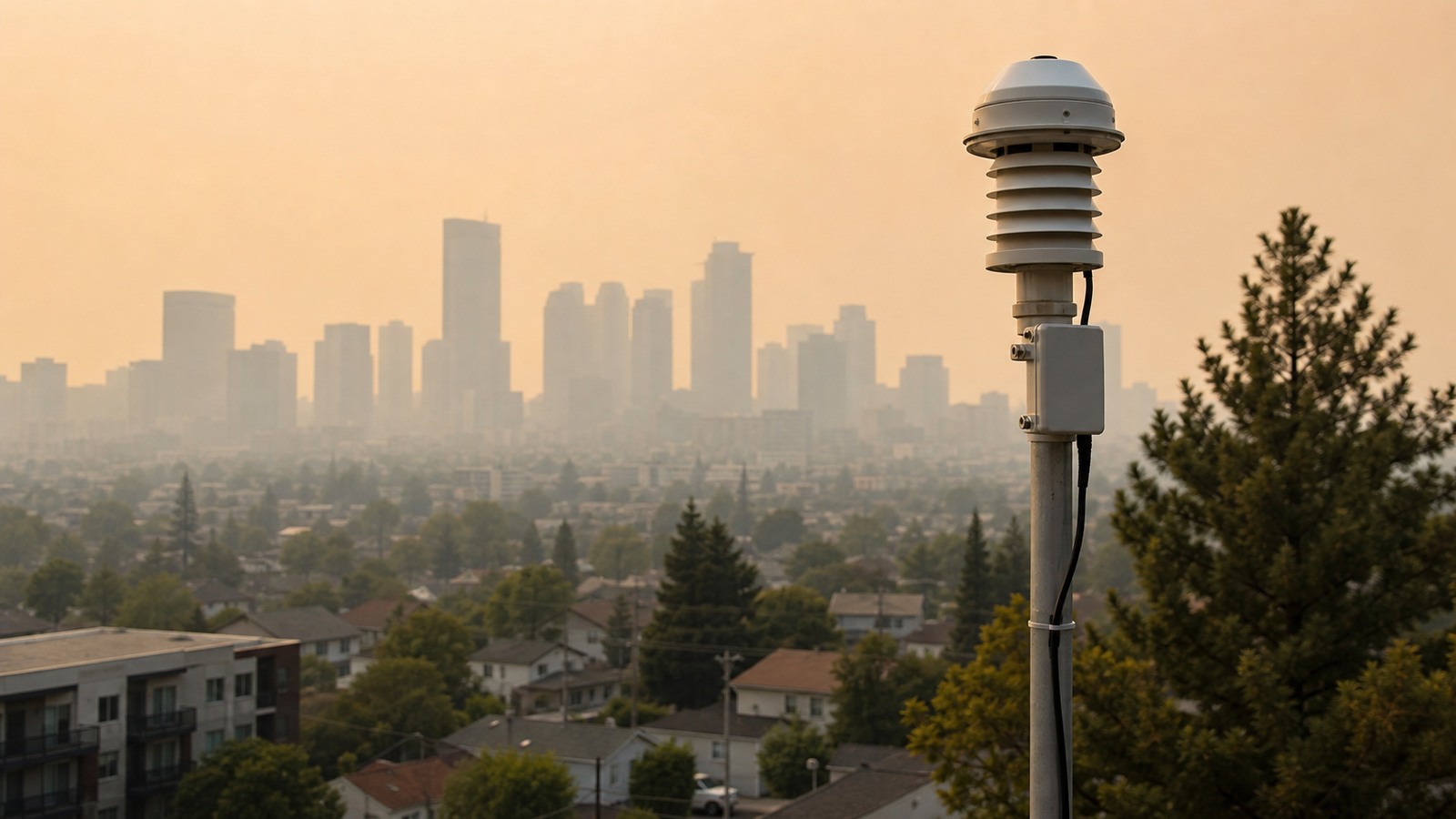
Air Quality Index Explained: How to Read AQI Like an Expert
Air is invisible, but its impact on your health, energy levels, and long-term well-being is anything but. In an era where environmental awareness is rapidly growing, the Air Quality Index (AQI) has become one of the most important public-facing metrics for understanding the air we breathe. Yet for many people, AQI remains a vague number—something glanced at on a weather app but rarely fully understood. Learning to read AQI like an expert transforms that number into actionable intelligence, empowering you to make smarter decisions about your health, activities, and environment. This guide breaks down the science, structure, and real-world application of AQI, giving you a clear and professional understanding of how it works and how to use it effectively in daily life.
A: 0–50 (Good) is considered safe for most people.
A: At AQI 101+, sensitive groups should limit exposure.
A: Fine particles that can enter the bloodstream via the lungs.
A: Yes, it can temporarily reduce particulate pollution.
A: Not always—indoor sources can raise pollution.
A: N95 or equivalent provides effective filtration.
A: Temperature inversions trap pollutants overnight.
A: Yes, especially HEPA filters for PM2.5 removal.
A: Hourly updates are common in most regions.
A: Fine particulate matter (PM2.5) poses the greatest health risk.
What Is the Air Quality Index (AQI)?
The Air Quality Index is a standardized system used to communicate how polluted the air currently is or how polluted it is forecast to become. Developed by environmental agencies such as the U.S. Environmental Protection Agency (EPA), AQI translates complex air pollution data into a simple numerical scale that the public can easily understand.
At its core, AQI is not a direct measurement of a single pollutant. Instead, it aggregates data from multiple pollutants and converts them into a unified scale that reflects overall air quality risk. This transformation is crucial because different pollutants affect the body in different ways, and AQI provides a simplified lens through which to interpret those risks collectively.
The scale typically ranges from 0 to 500, with higher values indicating worse air quality and greater potential health concerns.
The Pollutants Behind AQI
To truly understand AQI, you need to look beneath the surface at the pollutants it represents. The index is calculated using concentrations of several key air contaminants, each with distinct sources and health implications.
Ground-level ozone is one of the most significant contributors. Unlike the protective ozone layer in the upper atmosphere, ground-level ozone forms when sunlight reacts with pollutants emitted by vehicles, power plants, and industrial facilities. It is a primary component of smog and can irritate the lungs, reduce lung function, and aggravate respiratory conditions.
Particulate matter, often referred to as PM2.5 and PM10, is another critical factor. These microscopic particles can penetrate deep into the lungs and even enter the bloodstream. PM2.5, in particular, is associated with severe health risks, including heart disease, stroke, and chronic respiratory illnesses.
Carbon monoxide, sulfur dioxide, and nitrogen dioxide round out the list. Carbon monoxide interferes with oxygen delivery in the body, sulfur dioxide can trigger asthma symptoms, and nitrogen dioxide contributes to respiratory inflammation and the formation of other pollutants.
Each of these pollutants is measured individually, and the highest relative concentration determines the AQI value for a given time and location.
Understanding the AQI Scale
The AQI scale is divided into categories that correspond to different levels of health concern. These categories are color-coded in most systems, but even without visual cues, understanding the numerical thresholds is essential.
An AQI between 0 and 50 is considered good. Air quality is satisfactory, and air pollution poses little or no risk. Values between 51 and 100 are moderate, meaning air quality is acceptable, though there may be a slight risk for unusually sensitive individuals.
When AQI rises to the 101 to 150 range, it becomes unhealthy for sensitive groups. This includes children, older adults, and individuals with heart or lung conditions. At this level, prolonged outdoor exertion should be limited for those groups.
From 151 to 200, the air is unhealthy for everyone. Health effects may begin to appear in the general population, and sensitive groups may experience more serious symptoms. As the index climbs to 201 to 300, it enters the very unhealthy category, triggering health warnings and advisories.
Anything above 300 is considered hazardous, representing emergency conditions where the entire population is likely to be affected.
How AQI Is Calculated
AQI calculation is a highly structured process that involves converting pollutant concentrations into a normalized scale. Each pollutant has a set of breakpoints that correspond to AQI values. For example, a specific concentration of PM2.5 might map to an AQI of 75, while a higher concentration could map to 150.
The calculation involves a piecewise linear function that interpolates between these breakpoints. Once each pollutant’s AQI sub-index is calculated, the highest value is selected as the overall AQI for that location and time.
This approach ensures that the most harmful pollutant at any given moment drives the final AQI value, making the index a conservative and health-focused measure.
Why AQI Changes Throughout the Day
Air quality is not static. It fluctuates based on a complex interplay of environmental and human factors. Traffic patterns, industrial activity, weather conditions, and even time of day all influence AQI levels.
In urban areas, AQI often spikes during morning and evening rush hours due to increased vehicle emissions. During hot, sunny afternoons, ozone levels can rise significantly because of intensified chemical reactions in the atmosphere.
Weather also plays a major role. Wind can disperse pollutants, improving air quality, while stagnant air can trap them near the ground. Temperature inversions, where a layer of warm air traps cooler air beneath it, can lead to sudden and severe increases in pollution levels.
Understanding these dynamics allows you to anticipate AQI changes rather than simply reacting to them.
Health Impacts of Poor Air Quality
AQI is fundamentally a health metric, and its importance becomes clear when you consider the wide range of effects associated with air pollution. Short-term exposure to elevated AQI levels can cause symptoms such as coughing, throat irritation, shortness of breath, and fatigue.
For individuals with asthma or chronic obstructive pulmonary disease, even moderate AQI levels can trigger exacerbations. Cardiovascular effects are also significant, with pollution linked to increased risk of heart attacks and strokes.
Long-term exposure is even more concerning. Chronic exposure to high levels of particulate matter has been associated with reduced lung development in children, accelerated aging of the lungs, and increased mortality rates.
This is why AQI is not just a number—it is a real-time indicator of environmental risk.
How to Check AQI in Real Time
Accessing AQI data has never been easier. Most weather apps now include AQI readings, and dedicated platforms such as AirNow and the World Air Quality Index project provide detailed, location-specific data.
Many of these platforms also offer hourly forecasts, allowing you to plan your activities around expected changes in air quality. Advanced tools may include pollutant breakdowns, historical trends, and health recommendations tailored to your specific conditions.
Smart home devices and wearable technology are increasingly integrating air quality sensors, bringing AQI awareness directly into your living space.
Reading AQI Like an Expert
Becoming proficient in reading AQI involves more than just knowing the numbers. It requires contextual awareness and pattern recognition.
An expert understands that a moderate AQI of 90 driven by ozone may have different implications than the same value driven by particulate matter. They also recognize seasonal trends, such as higher ozone levels in summer and increased particulate pollution during wildfire season.
Timing matters as well. If AQI is expected to peak in the afternoon, scheduling outdoor activities in the early morning can significantly reduce exposure. Experts also pay attention to trends rather than isolated readings, using rising or falling patterns to guide decisions.
Practical Strategies for Different AQI Levels
Applying AQI knowledge in real life is where it becomes truly valuable. When air quality is good, outdoor activities can proceed without concern. As AQI moves into the moderate range, sensitive individuals may choose to limit prolonged exertion.
In the unhealthy for sensitive groups category, adjustments become more important. Schools may modify outdoor activities, and individuals with health conditions should take precautions.
When AQI reaches unhealthy levels, reducing outdoor exposure becomes essential. Exercising indoors, using air purifiers, and keeping windows closed can help minimize risk.
At very unhealthy and hazardous levels, broader measures may be necessary, including avoiding outdoor activities altogether and using protective masks designed to filter fine particles.
Indoor Air Quality and Its Relationship to AQI
While AQI primarily reflects outdoor conditions, indoor air quality is closely linked. Pollutants can infiltrate indoor spaces through ventilation systems, open windows, and even clothing.
High-efficiency particulate air filters, commonly known as HEPA filters, are effective at removing fine particles from indoor air. Maintaining proper ventilation, controlling humidity, and minimizing indoor pollution sources such as smoking or burning candles can also improve indoor air quality.
Monitoring indoor conditions alongside outdoor AQI provides a more comprehensive understanding of your overall exposure.
The Role of Technology in AQI Monitoring
Technological advancements are rapidly transforming how we measure and interact with air quality data. Satellite imagery, machine learning models, and dense sensor networks are enabling more accurate and localized AQI readings.
Portable air quality monitors are becoming more affordable and accessible, allowing individuals to measure pollution levels in their immediate environment. These devices can reveal micro-environment variations that are not captured by regional monitoring stations.
As technology continues to evolve, AQI data will become even more precise, personalized, and actionable.
Global Perspectives on AQI
While the concept of AQI is widely used, different countries may employ variations of the index. The United States, China, India, and European nations each have their own systems, with differences in pollutant weighting, breakpoints, and categories.
Despite these variations, the underlying principle remains the same: translating complex environmental data into a format that informs and protects public health.
Understanding these differences is particularly important for travelers, as an AQI value in one country may not correspond exactly to the same level of risk in another.
Why AQI Matters More Than Ever
Air quality has become a defining issue of the modern world. Urbanization, industrialization, and climate change are all contributing to evolving patterns of air pollution. Wildfires, in particular, have introduced new challenges, causing sudden and severe AQI spikes across large regions.
At the same time, public awareness is increasing. People are becoming more proactive about monitoring air quality and taking steps to protect themselves and their families.
AQI serves as a critical bridge between scientific data and everyday decision-making, making it an indispensable tool in navigating these challenges.
Building Daily Habits Around AQI Awareness
Integrating AQI into your daily routine does not require major lifestyle changes. A simple habit of checking AQI alongside the weather forecast can provide valuable insights for planning your day.
Over time, you will develop an intuitive understanding of how AQI affects your body and activities. This awareness allows you to make informed choices, whether it is adjusting your workout schedule, planning outdoor events, or improving indoor air quality.
Consistency is key. Treat AQI as a standard metric, just like temperature or precipitation, and it will become a natural part of your decision-making process.
Conclusion: From Numbers to Knowledge
The Air Quality Index is more than a numerical scale—it is a powerful tool for understanding and managing one of the most fundamental aspects of human health: the air we breathe. By learning how AQI is calculated, what it represents, and how it changes, you gain the ability to interpret it with confidence and precision.
Reading AQI like an expert means going beyond the surface, recognizing patterns, understanding pollutant dynamics, and applying that knowledge in practical ways. In a world where air quality can change rapidly, this expertise is not just useful—it is essential.
As awareness continues to grow and technology advances, AQI will play an even greater role in shaping how we live, work, and protect our health. The more you understand it, the better equipped you are to navigate the invisible yet powerful forces in the air around you.