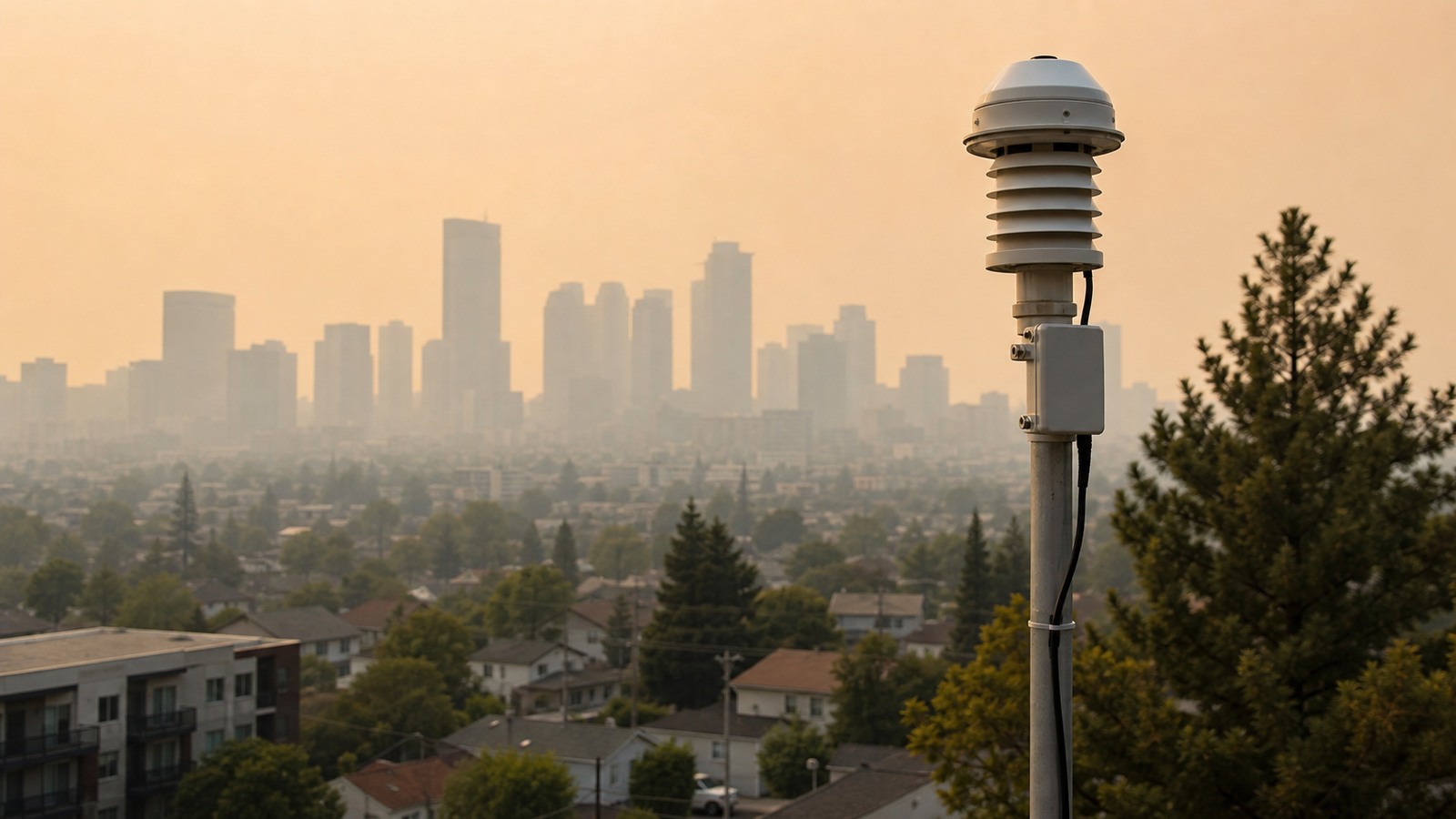
Understanding the Air You Breathe
Every breath you take carries more than just oxygen. Suspended in the air are microscopic particles and gases that can either sustain your health or silently erode it. The Air Quality Index, commonly known as AQI, is the standardized system used to translate complex air pollution data into a simple, digestible number. But behind that number lies a sophisticated network of environmental monitoring, atmospheric science, and public health insight. Today’s AQI is more than a statistic—it is a real-time indicator of environmental conditions that directly affect your lungs, your heart, and even your cognitive function. Whether you are stepping outside for a morning run, sending your children to school, or planning your commute, understanding AQI empowers you to make informed decisions that protect your health.
A: 0–50 is “Good” and safe for most people.
A: Above 100 AQI, sensitive groups should limit exposure.
A: Not always—filtration and ventilation matter.
A: PM2.5 due to its ability to enter the bloodstream.
A: Yes, N95 masks significantly reduce particle inhalation.
A: Typically hourly via monitoring stations.
A: Yes, wind and rain can rapidly reduce pollution.
A: Most use official data and are highly accurate.
A: Local emissions, geography, and weather all play roles.
A: Monitor AQI daily, limit exposure, and use air filtration.
What Is the Air Quality Index?
The Air Quality Index is a numerical scale designed to communicate how polluted the air currently is or how polluted it is forecasted to become. In the United States, the Environmental Protection Agency (EPA) calculates AQI based on five primary pollutants: ground-level ozone, particulate matter (PM2.5 and PM10), carbon monoxide, sulfur dioxide, and nitrogen dioxide.
Each pollutant is measured in real time through monitoring stations distributed across urban and rural regions. These readings are then converted into a unified index ranging from 0 to 500. The higher the number, the greater the level of air pollution and the more significant the potential health risks.
The AQI is divided into categories such as Good, Moderate, Unhealthy for Sensitive Groups, Unhealthy, Very Unhealthy, and Hazardous. While these labels may seem straightforward, the physiological impact behind each category is far more nuanced.
Breaking Down AQI Categories and Their Health Implications
When the AQI falls between 0 and 50, air quality is considered Good. At this level, pollution poses little to no risk, and outdoor activities can be performed without concern. However, as AQI values rise into the Moderate range (51–100), subtle effects may begin to emerge, particularly for individuals with pre-existing respiratory conditions.
The category labeled Unhealthy for Sensitive Groups (101–150) marks a critical threshold. At this point, children, older adults, and individuals with asthma or cardiovascular disease may begin experiencing symptoms such as shortness of breath, coughing, or chest discomfort. For the general population, effects are typically minimal, but prolonged exposure can still have cumulative consequences.
Once AQI surpasses 150, the air becomes Unhealthy for everyone. This is where the risks extend beyond vulnerable populations. Outdoor exertion can lead to measurable declines in lung function, and even short-term exposure can trigger inflammation in the respiratory system.
At Very Unhealthy levels (201–300), health alerts are often issued. The entire population is at risk of experiencing more serious effects, including exacerbated asthma attacks, increased hospital admissions, and heightened cardiovascular strain. When AQI exceeds 300, conditions are deemed Hazardous, and emergency measures are often recommended, including staying indoors and minimizing all outdoor exposure.
The Pollutants Behind the Numbers
To truly understand AQI, it is essential to examine the pollutants that drive it. Fine particulate matter, known as PM2.5, is one of the most dangerous components. These particles are smaller than 2.5 micrometers in diameter and can penetrate deep into the lungs, entering the bloodstream and contributing to systemic inflammation.
Ground-level ozone is another major contributor. Unlike the protective ozone layer high in the atmosphere, ozone at ground level forms through chemical reactions between nitrogen oxides and volatile organic compounds in sunlight. It is a powerful respiratory irritant that can damage lung tissue and reduce lung function.
Nitrogen dioxide, commonly emitted from vehicle exhaust, contributes to airway inflammation and can worsen asthma symptoms. Sulfur dioxide, often released from industrial processes, can trigger bronchoconstriction, particularly in individuals with asthma. Carbon monoxide, though less commonly elevated in AQI readings, interferes with oxygen transport in the blood and can be life-threatening at high concentrations.
These pollutants rarely exist in isolation. Instead, they interact within complex atmospheric systems influenced by weather patterns, geographic features, and human activity.
How Weather Shapes Your Local AQI
Air quality is not solely determined by emissions; it is heavily influenced by meteorological conditions. Temperature inversions, for example, can trap pollutants close to the ground, leading to sudden spikes in AQI. During these events, a layer of warm air sits above cooler air near the surface, preventing vertical mixing and allowing pollutants to accumulate.
Wind plays a crucial role in dispersing pollutants. Strong winds can dilute pollution levels, improving AQI, while stagnant air conditions can cause pollution to build up. Humidity and sunlight also contribute, particularly in the formation of ozone.
Wildfires have become an increasingly significant factor in AQI fluctuations across the United States. Smoke from distant fires can travel hundreds or even thousands of miles, elevating particulate matter levels far from the source. This means that your local AQI today may reflect environmental events occurring far beyond your immediate region.
Why AQI Matters for Your Health Today
Air pollution is not just a long-term concern; it has immediate physiological effects. Exposure to elevated AQI levels can trigger inflammation in the respiratory tract within hours. This inflammation can lead to coughing, throat irritation, and reduced lung capacity.
For individuals with asthma, high AQI can precipitate acute attacks, requiring medication or even emergency care. Cardiovascular effects are equally concerning. Fine particles can enter the bloodstream, contributing to plaque buildup in arteries and increasing the risk of heart attacks and strokes.
Emerging research also links poor air quality to cognitive effects. Short-term exposure to high levels of pollution has been associated with decreased concentration, impaired decision-making, and increased fatigue. Over time, chronic exposure may contribute to neurodegenerative conditions.
Children are particularly vulnerable due to their developing lungs and higher respiratory rates. Similarly, older adults face increased risks due to age-related declines in physiological resilience. Even healthy individuals are not immune; repeated exposure to moderate pollution levels can accumulate, leading to long-term health consequences.
How to Interpret Your Local AQI Reading
When you check today’s AQI, it is important to go beyond the number and consider context. Identify the primary pollutant driving the index, as different pollutants have different health implications. For example, an AQI driven by ozone may be more problematic during outdoor exercise, while particulate matter poses risks even during light activity.
Timing also matters. AQI levels can fluctuate throughout the day, often peaking in the afternoon due to increased sunlight and traffic emissions. Planning outdoor activities during periods of lower AQI can significantly reduce exposure.
Pay attention to official health recommendations associated with AQI levels. These guidelines are designed to translate scientific data into actionable advice, such as limiting outdoor exertion, wearing protective masks, or using air purifiers indoors.
Practical Strategies to Reduce Exposure
Managing your exposure to air pollution does not require drastic lifestyle changes, but it does demand awareness and strategic planning. On days when AQI is elevated, consider reducing outdoor activities, particularly those involving heavy exertion. If you must be outside, limit the duration and intensity of your exposure.
Indoor air quality becomes especially important during high AQI events. Keeping windows closed and using high-efficiency particulate air (HEPA) filters can significantly reduce indoor pollutant levels. Portable air purifiers are particularly effective in bedrooms and living spaces.
Transportation choices also matter. Avoid high-traffic routes when walking or cycling, as pollution levels are often higher near roadways. In vehicles, using recirculation mode can reduce the intake of polluted outdoor air.
Masks designed to filter fine particles, such as N95 or equivalent respirators, can provide an additional layer of protection during severe pollution events. However, not all masks are equally effective, and proper fit is essential for optimal performance.
The Role of Technology in Tracking AQI
Advancements in technology have made it easier than ever to monitor air quality in real time. Mobile apps and online platforms provide localized AQI data, often accompanied by forecasts and health recommendations. Some devices even allow individuals to measure air quality within their homes, offering insights into indoor pollution sources.
Wearable technology is beginning to integrate environmental monitoring, providing users with personalized exposure data. These innovations are transforming AQI from a static number into a dynamic tool for health management.
However, it is important to recognize the limitations of data. AQI readings are typically based on regional monitoring stations and may not capture hyper-local variations. Urban environments, in particular, can exhibit significant variability in air quality over short distances.
Long-Term Implications of Air Quality Exposure
While daily AQI readings provide immediate guidance, long-term exposure to air pollution carries cumulative risks. Chronic exposure to elevated particulate matter has been linked to reduced lung development in children, increased incidence of chronic obstructive pulmonary disease, and higher mortality rates.
Cardiovascular disease remains one of the most significant outcomes associated with long-term pollution exposure. Persistent inflammation and oxidative stress contribute to the progression of atherosclerosis, increasing the likelihood of heart attacks and strokes.
There is also growing evidence connecting air pollution to metabolic disorders, including diabetes, as well as adverse pregnancy outcomes such as low birth weight and preterm birth. These findings underscore the importance of viewing AQI not just as a daily metric, but as a component of broader environmental health.
Community and Policy-Level Impact
Individual actions can reduce personal exposure, but meaningful improvements in air quality require collective effort. Regulations on emissions from vehicles, industrial facilities, and power plants play a critical role in shaping AQI trends over time.
Urban planning decisions, such as the development of green spaces and the promotion of public transportation, can also influence air quality. Communities that prioritize sustainable practices often experience measurable improvements in AQI and associated health outcomes.
Public awareness is a key driver of policy change. As more individuals understand the health implications of AQI, there is increased demand for transparency, accountability, and innovation in environmental management.
Making AQI Part of Your Daily Routine
Incorporating AQI awareness into your daily routine is a practical step toward protecting your health. Just as you check the weather before leaving home, reviewing AQI can inform decisions about clothing, activities, and travel routes.
For families, this habit is particularly valuable. Monitoring AQI can help parents determine whether it is safe for children to play outside or participate in sports. For individuals with health conditions, it can guide medication use and preventive measures.
Over time, this awareness fosters a deeper understanding of environmental patterns and their impact on well-being. It transforms AQI from an abstract concept into a tangible part of everyday life.
The Future of Air Quality Awareness
As technology advances and environmental challenges evolve, the role of AQI is likely to expand. Integration with smart home systems, real-time alerts, and predictive analytics will make air quality data more accessible and actionable.
At the same time, global efforts to address climate change and reduce emissions will shape the trajectory of air quality in the years ahead. Innovations in renewable energy, transportation, and industrial processes hold the potential to significantly improve AQI levels worldwide.
Understanding your local AQI today is not just about immediate health decisions—it is part of a broader movement toward environmental stewardship and sustainable living.
Conclusion: Breathing Smarter in a Changing World
Air quality is an invisible force with visible consequences. The AQI serves as a bridge between complex environmental data and everyday decision-making, translating science into actionable insight. By understanding what your local AQI really means, you gain the ability to protect your health, adapt your habits, and contribute to a larger conversation about environmental responsibility.
In a world where air quality can change rapidly due to both natural and human factors, staying informed is not optional—it is essential. Every breath matters, and with the right knowledge, you can ensure that each one supports, rather than undermines, your health.