Lightning Is the Atmosphere Balancing an Electrical Imbalance
Lightning is a massive electrical discharge created when a thunderstorm separates charge faster than the surrounding air can quietly equalize it. Inside a deep storm, ice crystals, graupel, supercooled droplets, and powerful updrafts collide and sort electric charge into different regions of the cloud. The upper part of the storm often becomes positively charged, while a lower region becomes negatively charged, though real storms can be more complicated. As the electric field strengthens, it begins stressing the insulating air between charge regions. Eventually the air breaks down in branching channels, and a discharge connects cloud to cloud, cloud to air, or cloud to ground. The bright flash people see is only the visible part of a fast and complex electrical process. Thunder follows because the lightning channel heats air explosively, sending a sound wave outward.
A: Separated electric charge in a storm builds until air breaks down and discharges.
A: Lightning heats air explosively, creating a sound wave.
A: Yes. Bolts can reach outside the main rain area.
A: A hard-topped metal vehicle is much safer than being outside.
A: Metal conducts current well, but strike location depends on several factors.
A: It is a branching channel that advances before a cloud-to-ground strike connects.
A: Multiple strokes may travel through the same channel.
A: Yes. They do not remain electrically charged and may need immediate aid.
A: A short delay means the strike is nearby and shelter is urgent.
A: When thunder is heard, go indoors and wait before returning outside.
Charge Separation Starts in the Ice Region
Most lightning begins in the mixed-phase region of a thunderstorm, where ice crystals, graupel, and supercooled water droplets coexist. Collisions among these particles transfer charge. Updrafts carry lighter ice crystals higher, while heavier graupel tends to remain lower or fall. Over time, this sorting creates separated charge regions inside the cloud.
The exact charge structure varies between storms, but the basic result is an electric field. Opposite charges attract, and like charges repel. The stronger the separation becomes, the more the surrounding air is stressed. Air is normally a good insulator, which is why the charge can build rather than immediately flow away.
A thunderstorm’s strength affects this process. Strong updrafts lift ice and water rapidly, increasing collisions and charge separation. That is why lightning often becomes more frequent in vigorous storms, though lightning frequency alone does not describe every hazard.
Air Breaks Down in Branching Channels
When the electric field becomes strong enough, air begins to ionize. Ionized air can conduct electricity better than ordinary air. The discharge does not usually cross the gap in one smooth motion. It advances in branching segments, creating channels through the cloud or toward the ground.
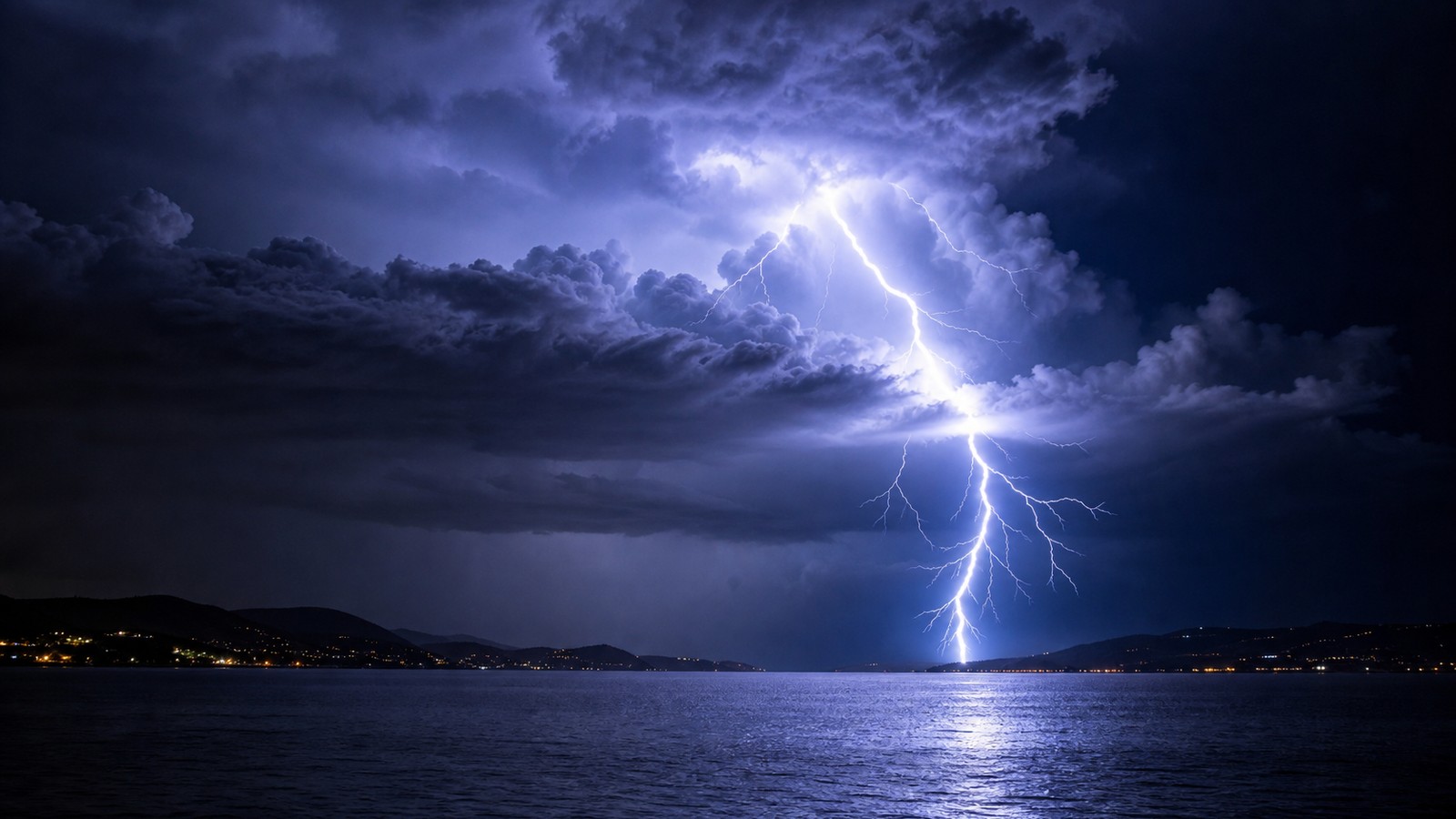
In cloud-to-ground lightning, a stepped leader may move downward in jumps, branching as it searches for a connection. Objects on the ground can send upward streamers toward the approaching leader. When a connection forms, a powerful return stroke surges upward along the channel. That return stroke is the brilliant flash most people recognize.
The process happens so fast that it looks instantaneous. High-speed cameras reveal multiple pulses, branches, and sometimes repeated strokes along the same path. A flickering lightning bolt may be several return strokes traveling through a channel that remains briefly conductive.
Most Lightning Stays Inside or Between Clouds
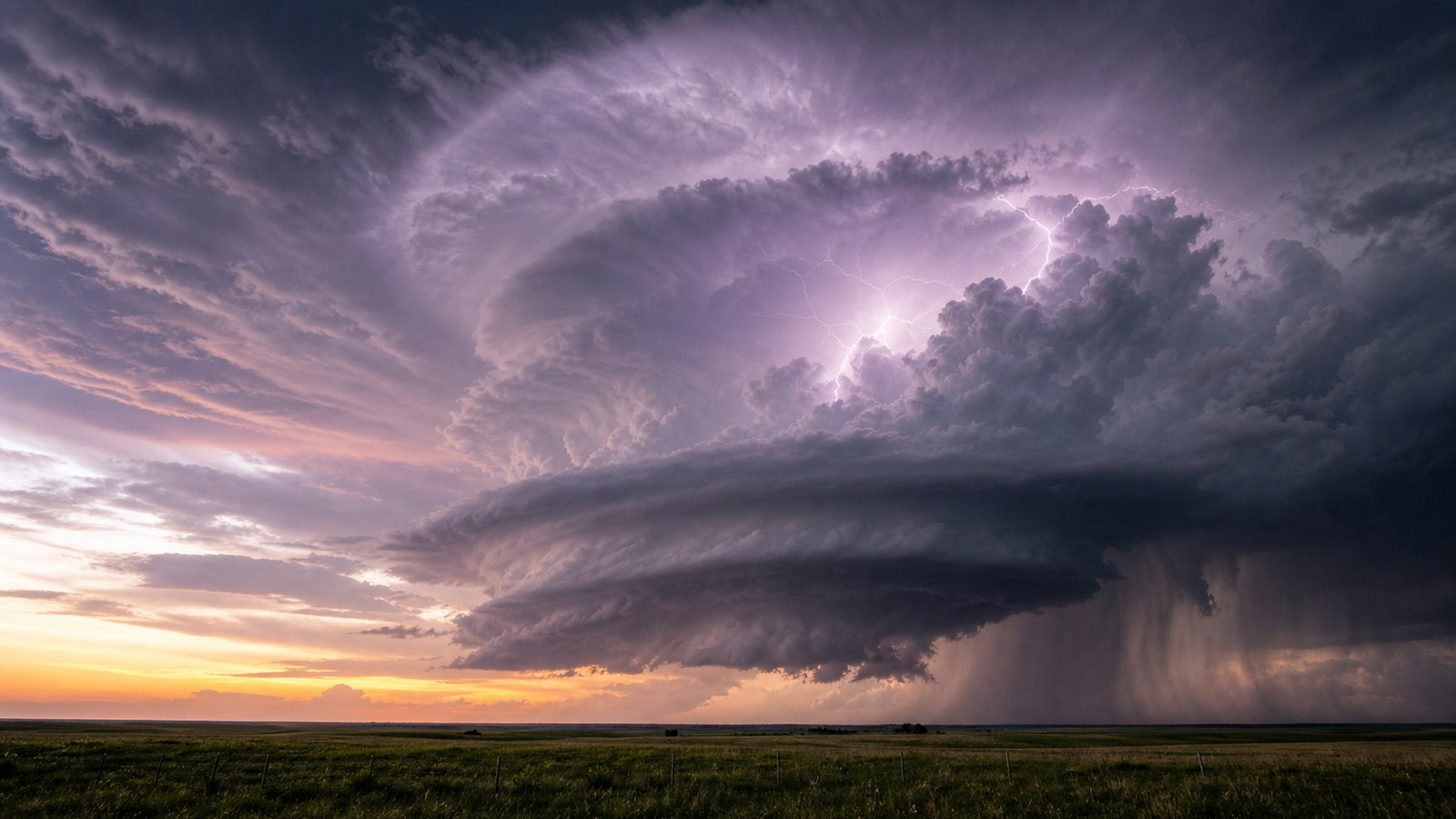
Cloud-to-ground lightning gets the most attention because it threatens people and structures, but much lightning remains within clouds or travels between cloud regions. Intracloud lightning can illuminate an entire thunderstorm from within, creating sheet-like flashes. Cloud-to-cloud discharges can connect separate charge regions across the sky.
Intracloud lightning can be frequent in strong storms because charge separation is happening throughout a deep cloud. Some storms produce intense electrical activity aloft before the first cloud-to-ground strike nearby. That is one reason distant flashes should not be dismissed when thunder is audible.
Cloud-to-ground lightning is especially dangerous because it connects the storm’s charge structure with objects and surfaces where people live. It can strike trees, water, fences, power lines, buildings, open fields, and people. The visible bolt is only part of the current’s path; ground current can spread outward after a strike.
Thunder Is Explosive Heating Made Audible
Lightning heats the air in its channel to extremely high temperatures in a fraction of a second. The air expands violently, creating a shock wave that becomes thunder. Close thunder sounds sharp or cracking because the sound from different parts of the channel reaches you almost together. Distant thunder rumbles because sound arrives from a long, branching path at different times.
The delay between flash and thunder tells you distance because light arrives almost instantly while sound travels much more slowly. Counting seconds between flash and thunder can estimate how far away the lightning occurred. If thunder is heard at all, the storm is close enough for lightning risk to matter.
Thunder also reveals that lightning may be hidden. A cloud-to-ground strike can occur behind rain, terrain, or buildings, while intracloud lightning may be obscured by the storm. Hearing thunder is a practical safety cue, not just a dramatic sound.
Positive Lightning Can Be Especially Dangerous
Most cloud-to-ground lightning lowers negative charge from the lower part of a storm, but positive lightning can originate from positively charged regions higher in the cloud. Positive strikes can be powerful and may occur farther from the main rain core. They are sometimes associated with bolts that seem to come from the side or upper region of the storm.
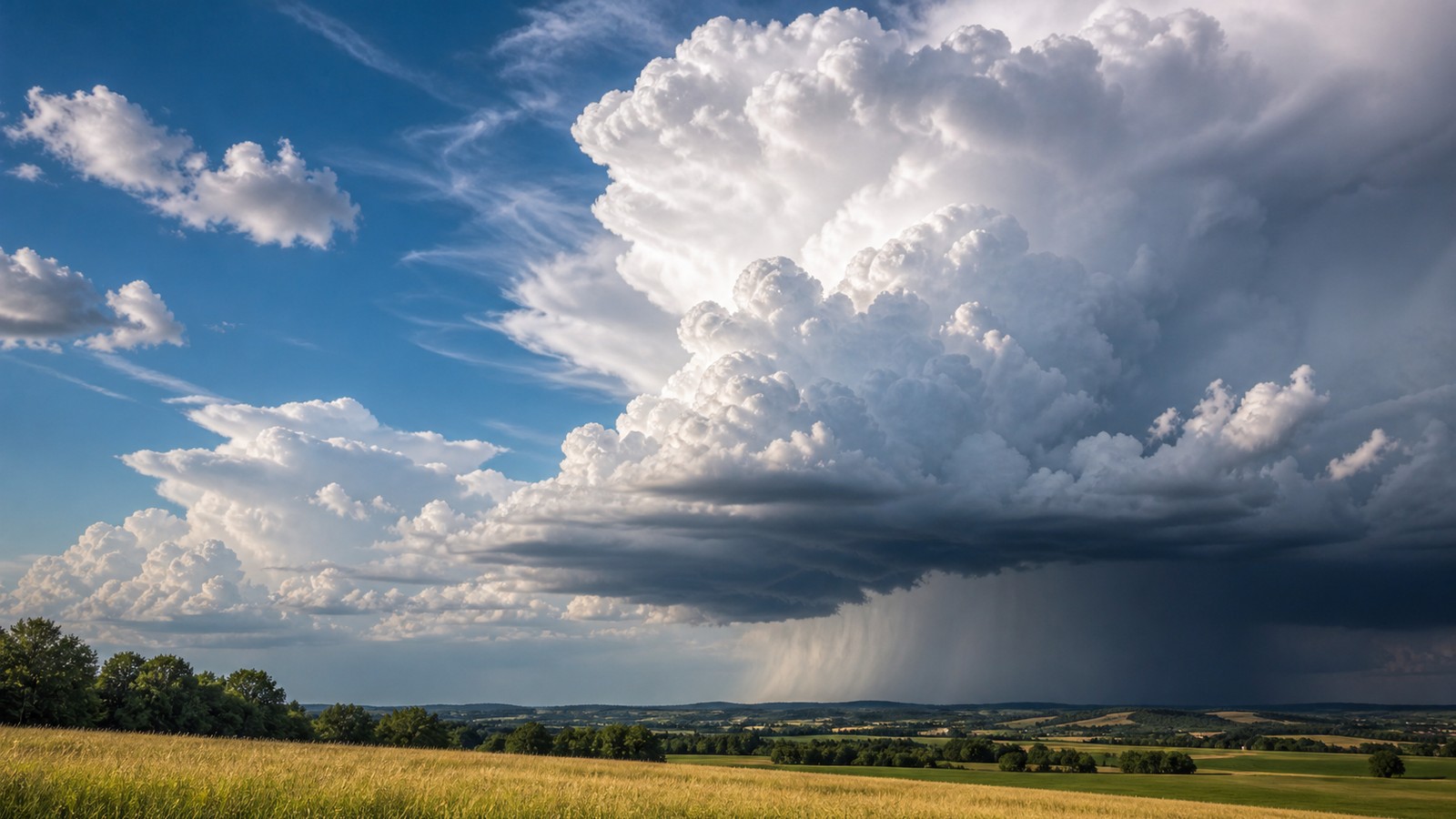
Positive lightning is one reason people should not rely on rainfall as the boundary of danger. A storm can throw a strike beyond the area where rain is falling. Open fields, beaches, lakes, and ridgelines can be dangerous even if the heaviest rain is not overhead.
The phrase bolt from the blue refers to lightning that travels away from the storm before striking under clearer sky. It is not common compared with ordinary lightning, but it is real enough that thunder should end outdoor activity before the storm is directly overhead.
Lightning Chooses Conductive Paths, Not Moral Targets
Lightning tends to follow paths that help reduce the electrical imbalance, but it does not consciously choose the tallest object every time. Height, isolation, conductivity, shape, wet surfaces, and the developing leader network all influence where a strike connects. Tall isolated objects are risky, but shorter objects can be struck too.
Metal does not attract lightning in the simple way many people imagine, but it conducts current very well. Fences, railings, plumbing, wiring, and metal equipment can carry dangerous current if lightning strikes nearby or enters a structure. Water also conducts enough to make swimming, boating, and standing near wet exposed areas risky during storms.
The safest lightning shelter is a substantial building with wiring and plumbing that can route current safely, or a hard-topped metal vehicle with windows closed. Open-sided shelters, trees, tents, dugouts, and picnic pavilions do not provide the same protection.
Lightning Can Injure Without a Direct Hit
A direct strike is not the only danger. Ground current can spread from a strike point through the surface. Side flashes can jump from a struck object to a nearby person. Contact injuries can occur when someone touches a conducting object. Upward streamers can injure people even if the main channel connects elsewhere.
This is why crouching in an open field is not a good safety plan. It does not make a person safe from ground current or nearby strikes. The better plan is to reach a real shelter before lightning is close. If no shelter exists, reducing exposure may help, but it is a last resort rather than a reliable solution.
Lightning injuries can affect the heart, nervous system, hearing, vision, and skin. People struck by lightning do not carry an electrical charge afterward, so it is safe to provide first aid. Immediate medical attention is critical.
Lightning Safety Is a Timing Problem
The safest rule is to move indoors when thunder is heard and stay there until at least thirty minutes after the last thunder. This rule works because lightning can strike before the storm is overhead and after the heaviest rain has moved away. Outdoor plans should treat thunder as the early warning.
Sports fields, pools, lakes, beaches, golf courses, farms, construction sites, and mountain trails are common exposure settings. Event leaders should decide who has authority to pause activity before storms arrive. Waiting for the first nearby strike is too late.
Indoors, avoid wired electronics, plumbing, and open windows during the storm. Modern buildings are much safer than open areas, but lightning current can still travel through wires and pipes. Safety improves when people treat lightning as a real electrical hazard rather than a background sound.
Why Lightning Still Surprises People
Lightning feels familiar because everyone has seen it, but its behavior is not intuitive. It can strike miles from the rain core. It can branch invisibly inside cloud before one channel reaches ground. It can hit water, trees, open fields, and structures. It can injure people through current paths that do not look like the dramatic bolt in a photograph.
Weather apps and radar can help show storm distance, but thunder remains one of the simplest cues. If you hear it, the storm is close enough. If flashes are frequent, the storm is electrically active. If the sky is darkening and towers are growing, the safest outdoor decision may need to happen before rain starts.
Lightning is beautiful because it reveals the storm’s electrical power. It is dangerous for the same reason. Understanding the process should make the flash more impressive, not make it seem safe.
Detection Networks Turn Flashes Into Data
Lightning detection networks use sensors to locate radio-frequency signals produced by discharges. By comparing arrival times at multiple sensors, the network can estimate where a strike occurred. Some systems distinguish cloud-to-ground lightning from intracloud activity, though classification is not perfect.
This data helps meteorologists, emergency managers, utilities, airlines, fire crews, and outdoor event planners. A sudden increase in lightning can show that a storm is intensifying. Strike locations can help determine when to pause outdoor work or inspect power infrastructure. Lightning data also supports wildfire monitoring in dry regions.
For ordinary users, detection maps are helpful but should not replace thunder-based safety. A phone map may lag, miss some flashes, or show a strike farther away while another channel is developing closer. If thunder is audible, the decision is already simple: move to shelter.
Lightning Protection Gives Current a Safer Path
Lightning rods do not prevent lightning. They provide a preferred path for current to reach the ground more safely if a structure is struck. A protection system includes air terminals, conductors, grounding, and bonding that work together to reduce fire and side-flash risk. A lonely metal rod without a complete system is not the same thing.
Modern buildings may also use surge protection to reduce damage to electrical equipment, but no system makes a storm harmless. People should still avoid wired electronics, plumbing, and open windows during close lightning. The building may be a good shelter, yet current can still travel through conductive pathways.
The main safety lesson is practical: be inside the protected space before the strike happens. Lightning protection is an engineering layer. Human behavior is still the first line of defense outdoors.
The End of Rain Is Not the End of Risk
Many people resume outdoor activity as soon as rain lightens, but lightning can persist after the heaviest precipitation moves away. The storm’s charge regions may still be active, and trailing or side flashes can reach areas that feel calmer. This is why safety guidance often recommends waiting after the last thunder.
The waiting period can feel inconvenient at pools, sports fields, and worksites, yet it solves a real timing problem. The atmosphere does not switch off electrically the moment rain stops. A storm that is drifting away may still be close enough for a dangerous discharge.
Good lightning safety therefore has two decisions: when to stop and when to resume. Stopping begins with thunder. Resuming waits until the storm has been quiet long enough to make a new strike unlikely nearby.