EF Ratings Measure Damage After the Tornado
Tornado categories are assigned with the Enhanced Fujita scale, usually shortened to the EF scale. Unlike hurricane categories, EF ratings are not used to classify a tornado while it is approaching. They are assigned after the storm, when trained survey teams examine damage and estimate the wind speeds likely required to cause it. The scale runs from EF0, the lightest category, to EF5, the most violent damage category. That does not mean every tornado neatly reveals its strongest wind. A tornado crossing open farmland may leave few clues, while a tornado hitting well-built structures may provide many. The EF rating is therefore a careful damage estimate, not a perfect instrument reading. It helps meteorologists document events, improve engineering knowledge, and compare tornado damage, but it should never be used as a reason to delay shelter during a warning.
A: Enhanced Fujita, the tornado damage rating scale used in the United States.
A: No. The official rating comes after survey teams examine damage.
A: No. Lower-rated tornadoes can be deadly, especially in weak shelter.
A: No. Width and intensity are measured separately.
A: New evidence or engineering review can refine the wind estimate.
A: Sometimes evidence is limited when few damage indicators are hit.
A: Shelter immediately rather than trying to guess the future rating.
A: Usually no. They are estimated from damage indicators.
A: Weak construction can fail at lower winds than well-built structures.
A: Use them after the storm for learning, records, and resilience planning.
Why Tornadoes Are Rated Afterward
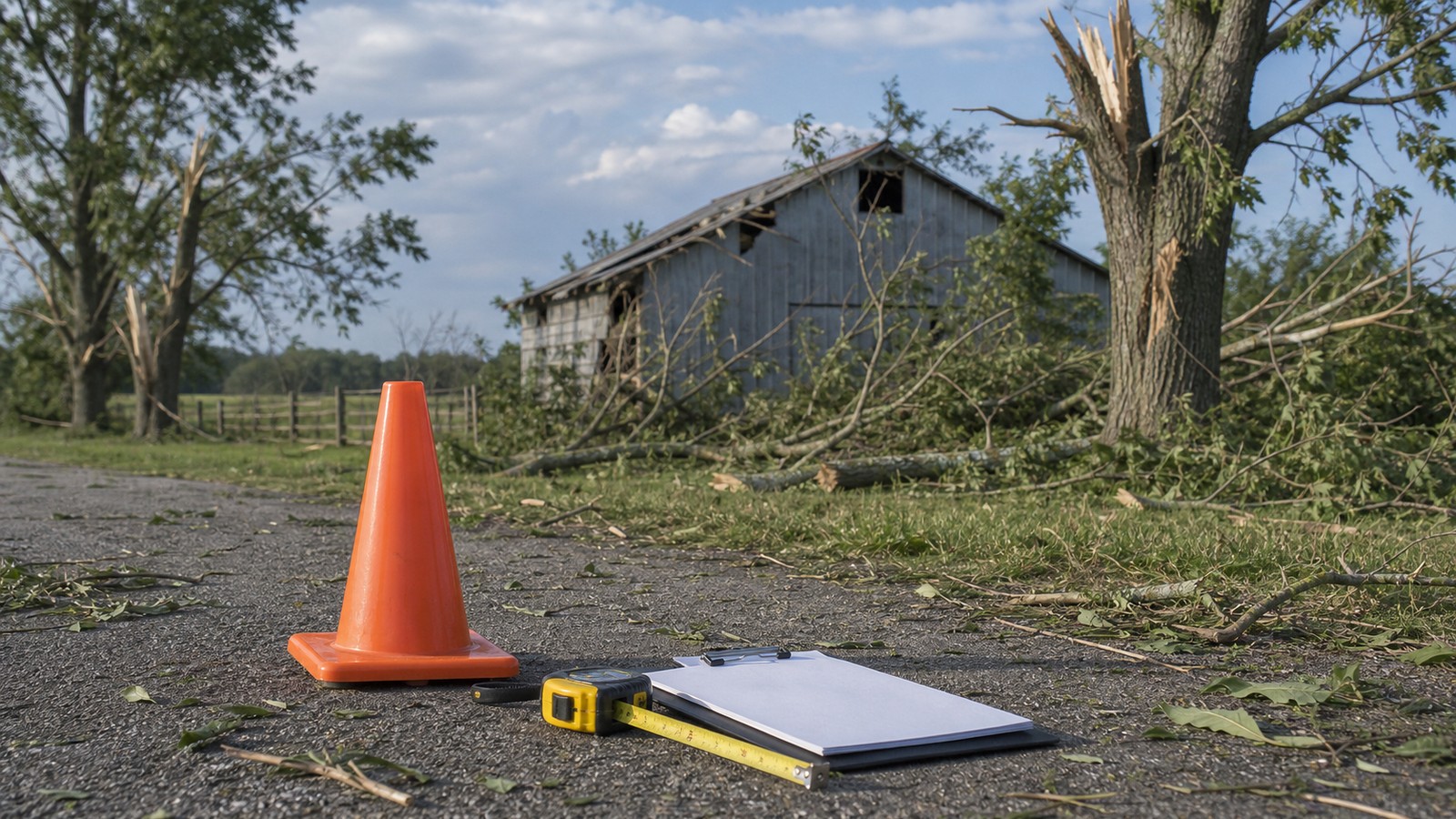
The strongest part of a tornado is small, fast-moving, and rarely sampled by instruments. Even when mobile radars measure impressive winds aloft, the official EF rating usually depends on damage at the surface. Surveyors visit the path, document what was damaged, evaluate construction quality, and compare the evidence with standardized damage indicators.
This post-event process is necessary because a tornado’s wind field is complicated. Winds vary across the path, change rapidly with time, and interact with debris and structures. A single home may fail because of wind speed, weak connections, poor anchoring, garage-door failure, or debris impact. Survey teams have to separate those factors as carefully as possible.
The result is an estimated wind range tied to the worst credible damage found. The rating does not necessarily capture every gust inside the tornado. It describes the damage evidence available after the event.
EF0 and EF1 Tornadoes Still Matter
EF0 and EF1 tornadoes are considered weak on the scale, but weak does not mean harmless. EF0 damage may include broken branches, minor roof damage, damaged gutters, and light structural impacts. EF1 damage can remove roof covering, push vehicles, snap trees, and damage mobile homes. People outdoors, in vehicles, or in fragile structures can still be injured.
These lower ratings are common, which can make people dismiss them. That is a mistake. A short EF1 tornado through a neighborhood can create dangerous debris, power lines, broken glass, and blocked roads. The fact that stronger categories exist does not make weaker tornadoes safe.
Warnings do not tell you which EF rating a tornado will receive later. A storm capable of producing a brief EF0 may also be evolving. Shelter decisions should be based on the warning, not an imagined final category.
EF2 and EF3 Bring Significant to Severe Damage
EF2 tornadoes can cause considerable damage, including major roof loss, snapped or uprooted trees, destroyed mobile homes, and damaged small structures. EF3 tornadoes can remove roofs and some walls from well-built homes, overturn trains, and cause severe damage to larger buildings. These categories are often life-threatening in ordinary above-ground rooms.
Construction quality becomes very important in this range. A poorly anchored structure may fail at lower winds than a well-built structure. Surveyors look for what was damaged and how it was built. They may rate one part of the path differently from another if the evidence changes.
For safety, EF2 and EF3 potential reinforces the value of interior lowest-floor shelter. The safest room is one with as many walls between you and the outside as possible. Helmets, sturdy shoes, and protecting yourself from debris become especially important.
EF4 and EF5 Are Violent Damage Ratings
EF4 and EF5 tornadoes represent violent damage. EF4 damage can level well-built homes and toss vehicles. EF5 damage involves incredible destruction to well-built structures, including homes swept from foundations when construction and anchoring evidence support that conclusion. These ratings are rare, but they define the upper end of tornado damage potential.
A tornado does not need to be EF5 to be catastrophic. EF4 damage is already devastating, and EF3 tornadoes can kill people in vulnerable locations. The highest categories are useful for documentation, engineering, and historical comparison, but they can distort public thinking if people treat anything below EF5 as manageable.
The safest approach is to assume any warned tornado can be dangerous enough to require immediate shelter. You will not know whether the storm is EF1 or EF4 while it is approaching your street.
Damage Indicators Shape the Rating
The Enhanced Fujita scale uses damage indicators such as one- and two-family residences, manufactured homes, schools, trees, towers, and other structures. Each indicator has degrees of damage. Surveyors use those descriptions to estimate a wind range. The process is more structured than simply looking at a photograph and guessing.
Context is essential. A collapsed outbuilding may not prove the same wind speed as the same level of damage to a well-engineered building. Tree damage varies by species, health, soil moisture, and exposure. Debris impacts can worsen damage in ways that do not reflect the background wind alone.
This is why official surveys take time. Teams may use ground inspection, aerial imagery, radar data, photos, videos, and engineering consultation. The final rating is a judgment supported by evidence, not a quick visual label.
Path Width and Path Length Are Separate
The EF rating describes damage intensity, not the width or length of the tornado path. A narrow tornado can be intense, and a wide tornado can be weaker than it looks. A long-track tornado may vary in rating along its path as it strengthens and weakens. A brief tornado may still receive a high rating if it hits a well-built structure with severe damage.
Width can affect how many people and buildings are exposed. Path length can affect how many communities are threatened. But neither one automatically equals a specific EF category. Survey summaries often include path length, width, injuries, fatalities, and rating because each tells a different part of the event.
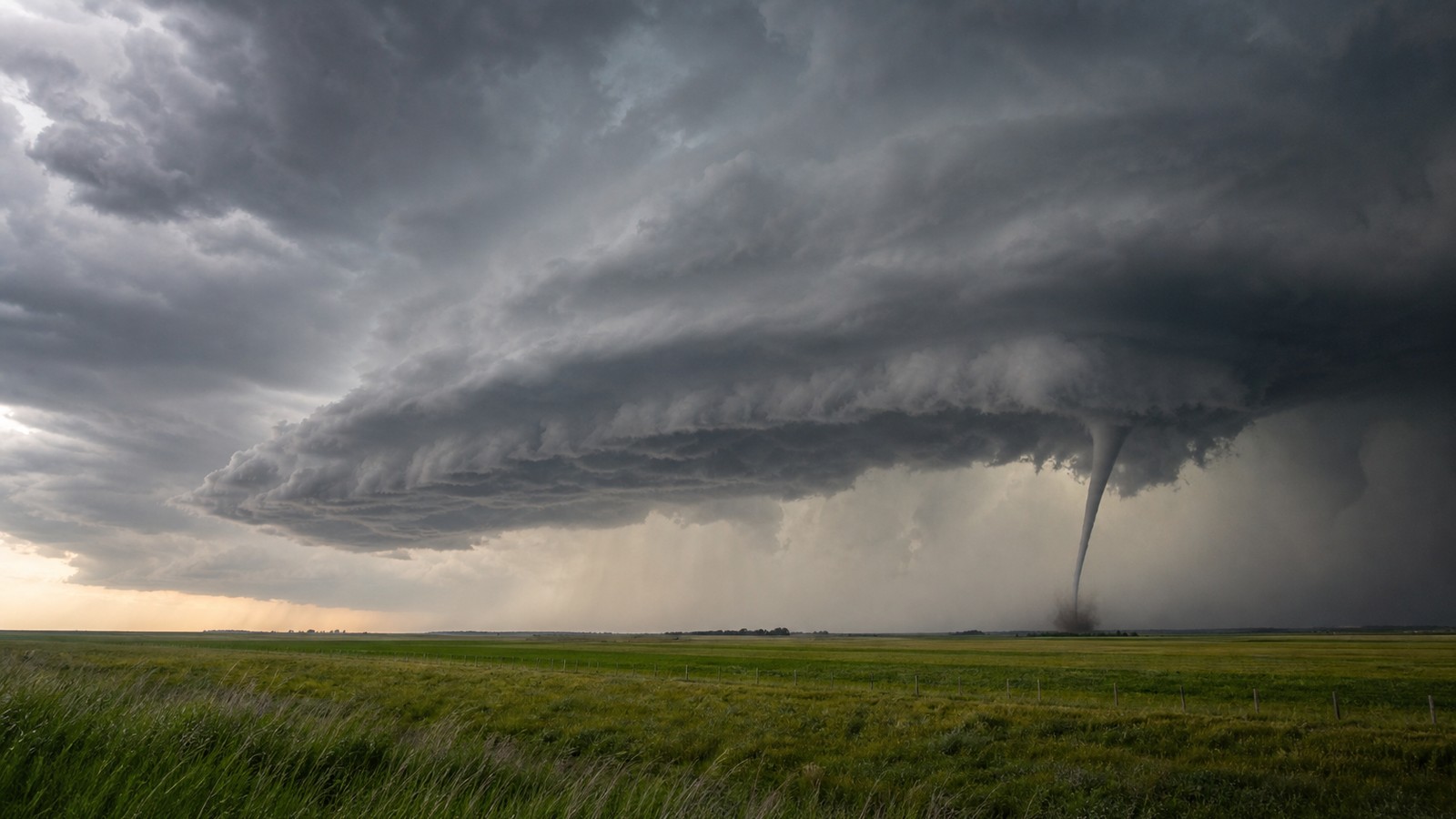
For public understanding, this distinction helps. A huge-looking wedge should not be judged safe or violent by shape alone. A thin rope tornado should not be ignored. The damage survey, not appearance, determines the category.
Why Ratings Can Change After Review
Initial tornado ratings can be preliminary. As survey teams gather more evidence, a rating may be upgraded, downgraded, or refined. A first look may miss the worst damage, or later engineering review may show that a structure failed at lower winds because of weak anchoring. Responsible ratings sometimes take time.
This can frustrate people who want an immediate category, but careful review is the point. Tornado records influence science, building codes, risk maps, and public memory. A rushed rating can misrepresent the event. A careful rating helps future warnings and engineering lessons.
Modern surveys may combine field work with drone imagery, satellite imagery, radar signatures, and public reports. The more evidence available, the better the final picture of the tornado’s intensity and path.
How To Use EF Ratings Safely
EF ratings are excellent for learning after the storm. They help explain what happened, compare events, and improve future resilience. They are not useful as a live shelter filter. A warning does not come with a guaranteed future EF number, and even a lower-rated tornado can injure people in the wrong place.
If you are under a tornado warning, use the same protective action regardless of the eventual rating. Move to a sturdy lowest-floor interior room, stay away from windows, and protect yourself from debris. If you live in a mobile home, have a plan to reach sturdier shelter before the storm arrives.
After the event, EF ratings can guide rebuilding and preparedness conversations. Before and during the event, the only category that matters is whether you are in danger.
Mobile Homes and Weak Structures Change the Stakes
Manufactured homes and poorly anchored small structures can be destroyed by winds that would cause less severe damage to a well-built frame house. This is why EF ratings require context. A destroyed mobile home does not automatically prove the same wind speed as a destroyed well-anchored permanent home, but the danger to people inside can still be extreme.
For safety planning, this distinction is important. A person in a mobile home should not wait to learn whether a tornado might be strong. Even lower-rated tornadoes can roll, displace, or destroy vulnerable structures. Community shelters, nearby sturdy buildings, and early movement plans save time when warnings are issued.
Surveyors account for structure type, anchoring, and damage pattern. Residents should account for vulnerability before the storm. The EF scale documents what happened afterward; shelter planning reduces the chance that the damage includes injuries.
Trees and Open Land Can Limit the Evidence
Many tornadoes cross fields, forests, wetlands, or sparsely populated land. In those areas, survey teams may have fewer damage indicators. Tree damage can help, but trees vary widely. A shallow-rooted or diseased tree can fall in weaker winds, while a healthier tree may withstand more. Soil moisture also affects uprooting.
Open-country tornadoes can therefore be difficult to rate. A strong circulation may pass over empty land without striking structures capable of revealing its peak wind. Radar, photographs, videos, and ground scouring can add context, but the official rating still depends on credible evidence.
This does not mean surveyors ignore rural tornadoes. It means the record may underrepresent the strongest winds if the tornado did not hit the right indicators. The absence of dramatic structural damage is not always proof that the circulation was weak.
EF Ratings Differ From Warning Urgency
Warnings are issued before the survey, so they cannot rely on a final EF category. Instead, warnings use radar evidence, spotter reports, environmental conditions, and storm history. A warning may mention a confirmed tornado, observed damage, or a particularly dangerous situation, but the exact EF rating remains unknown until later.
This difference explains why people should not ask, ‘What category is it?’ while deciding whether to shelter. The available question is whether the warned storm can produce a tornado at your location. If yes, the protective action is the same: get low, get inside, and put walls between you and debris.
EF ratings are a language for the archive. Warnings are a language for action. Mixing them up can delay decisions at the exact moment speed matters most.
The Scale Helps Future Buildings and Plans
EF surveys are not only historical bookkeeping. They help engineers and meteorologists understand how real structures fail under tornadic winds. Patterns in roof loss, wall collapse, garage-door failure, anchor performance, and debris impact can guide better construction practices and safer shelter recommendations.
Communities also use tornado records to understand local risk. A damage path may influence emergency planning, siren discussions, shelter grants, school procedures, and public education. The rating is one part of that record, alongside path length, width, injuries, fatalities, and storm context.
In that sense, the EF scale looks backward so future decisions can improve. The category assigned after one tornado may help another community build, warn, and shelter more wisely before the next one.